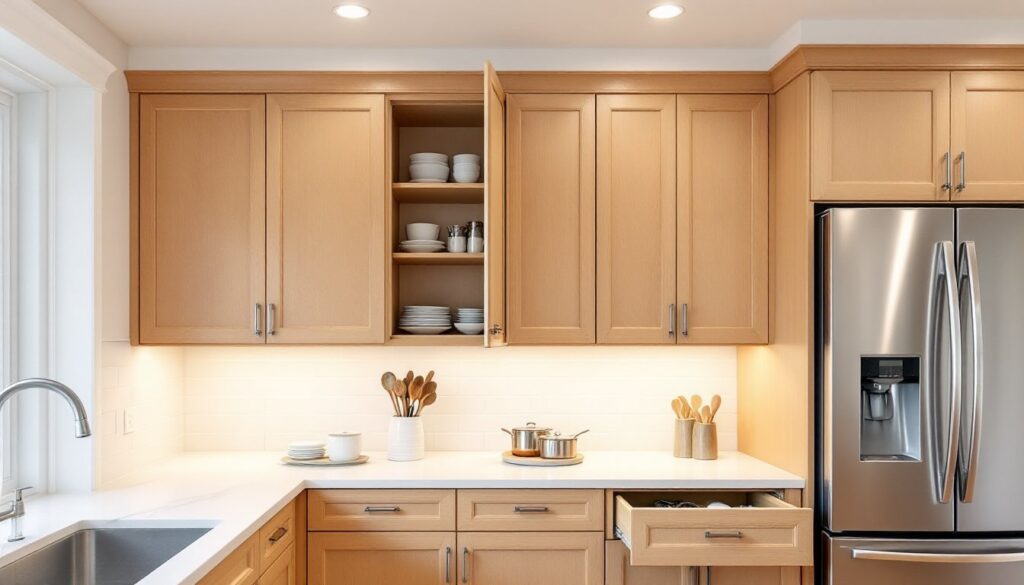
Cabinets account for roughly 40% of your kitchen remodel budget, so choosing the wrong ones isn’t just a design mistake, it’s a financial one. The difference between a set that warps in three years and one that lasts decades comes down to construction, materials, and knowing what quality looks like before you sign the check. Whether you’re gut-renovating or swapping out dated boxes, understanding cabinet grades, joinery methods, and finish durability will save you from buyer’s remorse and costly do-overs down the line.
Table of Contents
ToggleKey Takeaways
- Quality kitchen cabinets require ¾-inch plywood boxes, dovetail joinery, and durable finishes like catalyzed conversion varnish to resist moisture and wear for decades.
- Stock cabinets are fastest and cheapest ($60–$200 per linear foot), semi-custom options offer the best balance of quality and flexibility ($150–$650 per linear foot), while custom cabinets provide unlimited customization for high-end remodels.
- Always specify plywood for cabinet boxes and avoid particleboard, which is prone to swelling and failure in humid kitchen environments.
- Soft-close hinges and full-extension drawer glides from trusted hardware brands like Blum and Grass reduce wear and are critical features of the best kitchen cabinets.
- Compare warranties carefully—lifetime coverage on boxes and five-year finishes are standard for quality brands—and request physical samples before committing to any purchase.
- Semi-custom cabinets from brands like KraftMaid, Wellborn, and CliqStudios typically deliver the best value for most kitchen remodels without the extreme cost or long lead times of fully custom options.
What Makes a Kitchen Cabinet High-Quality?
High-quality kitchen cabinets aren’t just about pretty doors, they’re built with solid joinery, durable materials, and hardware that won’t sag after a year of use. Here’s what separates the best quality kitchen cabinets from the budget-bin alternatives.
Box Construction: The cabinet box (the structural frame) should be ¾-inch plywood, not particleboard. Plywood resists moisture, holds screws better, and won’t swell if a pipe leaks. Particleboard is cheaper but prone to failure in humid environments like kitchens.
Joinery Methods: Look for dovetail or dowel joints on drawer boxes. Stapled or glued butt joints will fail under the weight of pots and dishes. Full-extension ball-bearing drawer glides are standard in quality cabinets, anything less is a red flag.
Door Construction: Solid wood frames with mortise-and-tenon joints (not just glue) hold up better than MDF or five-piece laminate doors. If you’re going with a painted finish, MDF cores are acceptable, but the frame should still be hardwood.
Finish Quality: A catalyzed conversion varnish or UV-cured finish resists chips, moisture, and kitchen grease far better than basic lacquer. Run your hand along the interior, quality manufacturers finish the inside, too.
Adjustability: Shelves should sit on metal pins or clips, not plastic. European-style hinges with six-way adjustment let you fine-tune doors after installation, which is critical in older homes where walls aren’t perfectly plumb.
Hardware: Soft-close hinges and drawer glides aren’t just luxury features, they reduce wear on the cabinet and prevent slamming. Blum, Grass, and Salice are reliable brands: cheap no-name hardware fails fast.
If a manufacturer won’t disclose box thickness, joinery type, or hinge brand, walk away. The best cabinets for kitchen use are transparent about construction because they have nothing to hide.
Top Kitchen Cabinet Types Compared
Cabinets fall into three categories: stock, semi-custom, and custom. Each has trade-offs in cost, lead time, and flexibility. Here’s how they stack up.
Stock Cabinets
Stock cabinets are pre-manufactured in standard sizes (typically 3-inch increments) and sold ready-to-ship from big-box stores or online retailers. You’re limited to a fixed range of door styles, finishes, and depths (usually 12 inches for uppers, 24 inches for lowers).
Pros:
- Fastest delivery (often same-week pickup)
- Lowest upfront cost ($60–$200 per linear foot)
- Easy to plan with online configurators
Cons:
- Fit issues in non-standard spaces (you’ll need filler strips)
- Fewer finish and hardware options
- Often use particleboard boxes or lighter-duty hardware
Best for: Rentals, flips, or tight budgets where speed matters more than customization. If you’re handy with a circular saw, you can add trim or paint to upgrade the look.
Semi-Custom Cabinets
Semi-custom cabinets start with a standard line but allow modifications: custom widths, depths, specialty units (lazy Susans, pull-out spice racks), and a wider range of finishes. Many mid-tier manufacturers fall here.
Pros:
- More size flexibility (often 1-inch increments)
- Better materials (plywood boxes are common)
- Hundreds of door styles and finishes
- Lead time of 4–8 weeks
Cons:
- Cost jumps significantly ($150–$650 per linear foot)
- Still limited compared to full custom (no non-standard heights or exotic veneers)
- Modifications add up fast, prices can creep toward custom territory
Best for: Most kitchen remodels. You get the quality and fit of custom without the lead time or extreme cost. This is where who makes the best kitchen cabinets for the money usually lands: brands that offer plywood construction and adjustable options without the bespoke price tag.
Custom Cabinets
Custom cabinets are built to your exact specs by a local shop or high-end manufacturer. Any size, any material, any finish. If you want 18-inch-deep wall cabinets or book-matched walnut veneer, custom is the only route.
Pros:
- Perfect fit for unusual layouts (angled walls, vaulted ceilings)
- Unlimited material and finish choices
- Built by skilled cabinetmakers, often with hand-rubbed finishes
Cons:
- Expensive ($500–$1,500+ per linear foot)
- Long lead times (8–16 weeks or more)
- Requires detailed drawings and multiple consultations
Best for: High-end remodels, historic homes, or kitchens with architectural quirks. If you’re going custom, visit the shop and inspect samples, craftsmanship varies widely. Demand references and photos of completed installs.
Best Cabinet Materials for Durability and Style
The material you choose impacts both longevity and aesthetics. Here’s what works, and what doesn’t, in real-world kitchens.
Solid Hardwood (Maple, Oak, Cherry, Hickory): The gold standard for face frames and doors. Maple is dense and takes paint well: oak has prominent grain that shows through stain: cherry darkens beautifully with age: hickory offers rustic character. All are durable, but they expand and contract with humidity, expect slight seasonal movement. Budget around $200–$600 per linear foot for solid wood cabinets.
Plywood (Birch, Maple veneer): Used for cabinet boxes, plywood is stronger and more moisture-resistant than particleboard. ¾-inch multi-ply construction is standard for quality boxes. Plywood won’t swell if a dishwasher leaks, and it holds screws better over time. Always spec plywood for boxes, even if doors are MDF or solid wood.
MDF (Medium-Density Fiberboard): Ideal for painted doors because it’s smooth, doesn’t show grain, and resists expansion. But, MDF is heavy and vulnerable to water damage, keep it away from sinks and dishwashers unless it’s sealed properly. It’s common in cabinet refacing projects where existing boxes are sound but doors need replacement.
Particleboard: The budget option. It’s fine for interior shelving in dry climates, but avoid it for boxes or anywhere near moisture. If a manufacturer uses particleboard for the main structure, it’s not one of the best quality kitchen cabinets on the market.
Thermofoil (RTF – Rigid Thermofoil): MDF wrapped in a vinyl film. It’s moisture-resistant, easy to clean, and affordable. The downside: heat from dishwashers or toasters can cause peeling over time. Don’t use it near appliances that generate steam or high heat.
Metal and Glass: Stainless steel or aluminum cabinets are ultra-durable and easy to clean, but industrial-looking and expensive. Glass-front doors (with wood frames) add openness and work well for display cabinets, but you’ll see everything inside, plan for good organization.
Sustainability Note: If eco-friendliness matters, look for cabinets certified by the Forest Stewardship Council (FSC) or those using low-VOC finishes. Many manufacturers now offer bamboo or reclaimed wood options.
Leading Kitchen Cabinet Brands Worth Considering
When deciding which kitchen cabinets are the best, brand reputation and warranty matter as much as specs. Here are manufacturers that consistently deliver quality construction and customer support.
KraftMaid (Semi-Custom): Owned by Fortune Brands, KraftMaid offers plywood box construction, soft-close hardware, and a wide range of finishes. Their warranty covers material defects for as long as you own your home. Available at Lowe’s and through dealers, with lead times around 4–6 weeks. Expect $150–$400 per linear foot.
Wellborn (Semi-Custom): Family-owned since 1961, Wellborn builds cabinets in Alabama with solid wood face frames and plywood boxes. Their Premier series includes dovetail drawers and Blum hardware. They’re transparent about construction methods and offer a limited lifetime warranty. Pricing runs $200–$500 per linear foot.
IKEA (Stock): IKEA’s SEKTION line uses 5/8-inch particleboard boxes with a melamine coating and a 25-year warranty. The frameless European design maximizes interior space, and the modular system is DIYer-friendly. Doors and drawer fronts are sold separately, so you can mix and match or upgrade later. Budget $75–$200 per linear foot, but factor in the cost of installation if you’re not doing it yourself.
Merillat (Stock & Semi-Custom): Another Fortune Brands product, Merillat’s Classic line is stock: Masterpiece is semi-custom. Both use plywood boxes and offer soft-close options. They’re sold through Home Depot and local dealers. Quality is solid for the price ($100–$350 per linear foot), and availability is excellent.
CliqStudios (Semi-Custom, Online): Direct-to-consumer model cuts out the showroom markup. All cabinets use ¾-inch plywood boxes, dovetail drawers, and soft-close hinges. Samples are available for $15 each, and design consultations are free. Prices range $150–$400 per linear foot, with 6–8 week lead times.
Dura Supreme (Semi-Custom): Known for quality finishes and specialty storage options. They offer over 150 door styles and will color-match almost anything. Plywood construction, full-extension glides, and adjustable hinges are standard. Expect $250–$600 per linear foot and 6–10 week delivery.
Wood-Mode / Brookhaven (Custom): High-end custom cabinetry with hand-applied finishes and nearly unlimited customization. If you want furniture-grade details like inset doors, beaded face frames, or exotic veneers, this is where to look. Budget $800–$1,500+ per linear foot and 10–16 weeks.
Buying Tips:
- Request a sample door before committing. Check the finish quality, hinge operation, and weight.
- Compare warranties. Lifetime warranties on boxes and five years on finishes are standard for quality brands.
- Ask about lead times and supply chain issues, some manufacturers are still dealing with delays as of 2026.
- Consider a kitchen cabinet upgrade instead of full replacement if your existing boxes are solid but cosmetically dated.
For design inspiration and real-world examples, The Kitchn showcases a wide range of cabinet styles in actual homes, while Remodelista’s cabinet collection highlights curated, design-forward options. If you’re browsing for visual ideas, Houzz’s kitchen cabinet gallery offers thousands of photos sorted by style, material, and brand.
Final Thought: The best cabinets for kitchen use aren’t always the most expensive, they’re the ones built with quality materials, solid joinery, and reliable hardware that match your budget and timeline. Do your assignments, ask for samples, and don’t skip the warranty fine print.