Finding an apartment with in-unit laundry isn’t just a luxury anymore, it’s become a dealbreaker for many renters. No more hauling baskets down three flights of stairs, no more quarters hoarded in a jar, and definitely no more waiting for a free machine while your neighbor’s spin cycle drags on. In-unit washers and dryers change the game for apartment living, offering convenience, time savings, and a level of control that shared laundry rooms simply can’t match. Whether you’re apartment hunting or considering an upgrade, understanding the ins and outs of in-unit laundry setups helps you make smarter rental decisions and get the most value from this increasingly common amenity.
Table of Contents
ToggleKey Takeaways
- Apartments with washer and dryer in-unit save renters 2–4 hours per laundry day compared to shared facilities, plus eliminate theft risks and hygiene concerns.
- In-unit laundry setups vary widely—verify whether your apartment includes machines, hookups only, electrical specs (240V vs. 120V), and venting access before committing.
- Full-size, stackable, and compact machines each offer different trade-offs; full-size handles larger loads in less time, while compact units save space at the cost of frequent smaller loads.
- Proper maintenance—cleaning lint traps, leveling washers, using HE detergent, and installing braided steel hoses—extends appliance lifespan and prevents costly damage.
- In-unit laundry adds $50–$200 monthly to rent but typically pays for itself within weeks when compared to shared machine costs ($400–$1,000 annually) plus your time.
Why In-Unit Laundry Matters More Than You Think
The difference between in-unit laundry and shared facilities goes way beyond convenience. Time is the biggest factor, a typical laundry day in a shared facility eats up 2–4 hours when you factor in travel, waiting, and monitoring. With in-unit machines, you toss a load in before work and move it to the dryer during lunch. Done.
There’s also the hygiene angle. Your washer, your detergent, your settings. You’re not dealing with mystery residue from someone else’s fabric softener or wondering if the last person cleaned the lint trap. This matters especially for folks with sensitive skin or allergies.
Security plays a role too. Leaving clothes unattended in a shared laundry room invites theft or the awkward situation where someone dumps your wet clothes on a folding table. In-unit laundry eliminates that entirely. According to discussions on apartment living trends, renters increasingly view in-unit machines as essential rather than optional.
Finally, there’s cost predictability. Shared machines typically run $2–$5 per wash and dry cycle. That’s $8–$20 per week for an average household, or roughly $400–$1,000 annually. In-unit machines shift those costs to water, electricity, and occasional maintenance, expenses that are often easier to control and budget for.
What to Look for When Searching for Apartments with Washer and Dryer
Not all in-unit laundry setups are created equal. Start by confirming whether the unit comes with machines included or just hookups. “Washer/dryer hookups” means you’ll need to buy or rent your own appliances, factor that into your move-in budget.
Check the electrical and plumbing specs. Most full-size dryers require a 240V outlet (the same type used for electric stoves). Older buildings may only have 120V, which limits you to compact or ventless models. Gas dryers need a gas line hookup, which isn’t standard in all units.
Ask about venting. Traditional dryers vent moisture and lint outside through a 4-inch duct. If there’s no exterior vent access, you’ll need a ventless (condensing) dryer, which takes longer to dry and typically costs more upfront.
Water supply matters too. Standard washers need both hot and cold water lines plus a drain. If the apartment advertises “washer hookups,” verify that both supply valves and a standpipe or utility sink drain are present. Some older buildings only have a single cold-water line, which works fine for modern washers but limits cycle options.
Inspect the laundry space itself. Measure the alcove or closet, you’ll need clearance for door swings, hose connections, and airflow. Full-size washers are typically 27 inches wide, but compact models run 24 inches. Stacked units need roughly 75–80 inches of vertical clearance.
Finally, clarify maintenance responsibilities in your lease. Who pays for repairs if the washer leaks or the dryer quits? If the landlord owns the appliances, they’re usually on the hook. If you bring your own, you’ll handle it.
Types of In-Unit Laundry Setups You’ll Encounter
Understanding the different configurations helps you evaluate what works for your space and laundry habits.
Full-Size Washer and Dryer
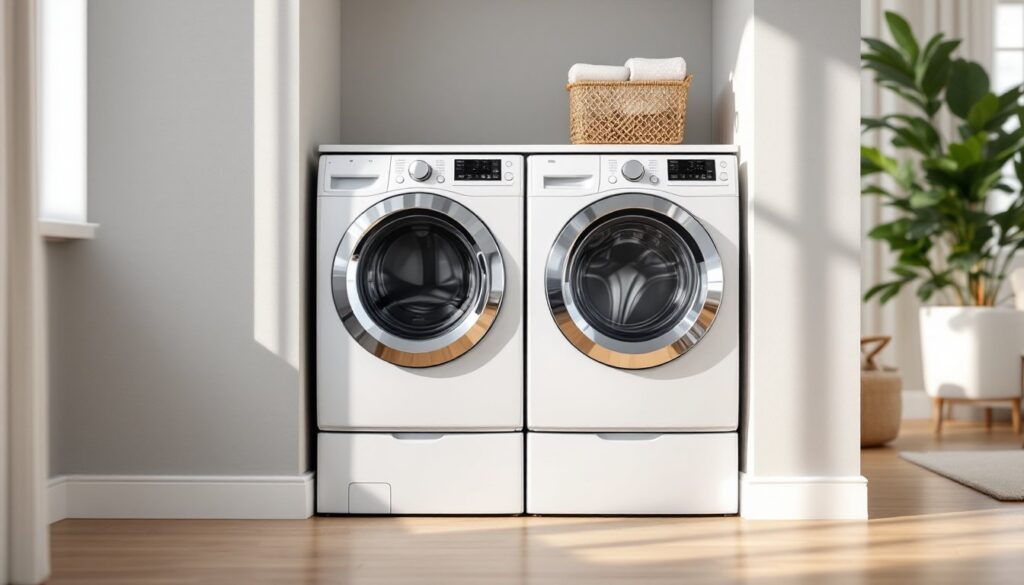
These are the workhorses, 4.5–5.5 cubic feet capacity washers paired with dryers of similar size. They handle king-size comforters, multiple towels, and a week’s worth of laundry without issue. You’ll typically find them side-by-side in a dedicated laundry closet or utility room.
Full-size units require standard hookups: hot and cold water supply lines, a drain, a 240V outlet or gas line for the dryer, and proper venting. They’re the gold standard if you’ve got the space and infrastructure. Expect wash cycles around 30–60 minutes and dry cycles of 40–70 minutes depending on load size and fabric type.
One trade-off: they’re not portable. If you move, you’ll either sell them, hire movers (washers can weigh 200+ pounds), or negotiate leaving them for the next tenant.
Stackable and Compact Units
Stackable models are full-size or slightly narrower machines (24–27 inches wide) designed to mount vertically using a stacking kit. This setup saves floor space in tight closets or alcoves. Most modern front-load washers are stackable by design.
Compact units, usually 2.0–2.5 cubic feet, fit in even smaller spaces and often run on 120V power, which means they’ll plug into a standard outlet. The catch is capacity. You’ll do more frequent, smaller loads, and dry times stretch longer because compact dryers (especially ventless models) work slower.
Ventless (condensing) dryers are common in compact setups. They pull moisture from clothes and condense it into a reservoir you empty manually or drain into a sink. They don’t need exterior venting, which makes them apartment-friendly, but a typical load can take 2–3 hours to dry fully. Washer-dryer combos combine both functions in one unit, great for micro-apartments but with similar capacity and speed limitations.
If you’re handy and the apartment allows modifications, installing a dryer vent involves cutting through an exterior wall, running rigid or flexible metal ducting, and mounting a vent cap outside. This is doable for ground-floor or single-story units but gets complicated in multi-story buildings. Check your lease and local codes first, some buildings prohibit tenants from altering exterior walls.
How to Maximize Your In-Unit Laundry Experience
Once you’ve got in-unit machines, a few best practices keep them running efficiently and extend their lifespan.
Don’t overload. Washers and dryers work best at 75–80% capacity. Overstuffing prevents proper agitation and airflow, leaving clothes damp or soapy. If you can’t fit your hand between the top of the load and the drum, pull some items out.
Clean the lint trap after every dryer cycle. This isn’t optional, lint buildup is a leading cause of dryer fires. Once a month, vacuum inside the lint trap slot to catch debris that slips past the screen. If you’ve got a vented dryer, inspect and clean the duct line every 6–12 months using a dryer vent brush kit.
Run washer maintenance cycles monthly. Most modern washers have a self-clean function. If yours doesn’t, run an empty hot-water cycle with a cup of white vinegar or a commercial washer cleaner. This prevents mold, mildew, and detergent residue buildup in the drum and hoses.
Use the right detergent. High-efficiency (HE) washers, front-loaders and many top-loaders, require HE detergent, which produces fewer suds. Regular detergent can cause excess foam, poor rinsing, and even mechanical issues over time. Check your washer’s manual.
Level your washer. If it’s walking across the floor or banging during spin cycles, it’s not level. Use a bubble level and adjust the feet until it sits stable. This reduces vibration, noise, and wear on internal components.
For smart home enthusiasts, many newer washers and dryers integrate with home automation systems. You can start cycles remotely, get alerts when laundry is done, and even troubleshoot error codes via app. Resources like home tech trend sites cover the latest in connected appliances if you’re curious about upgrading.
Safety note: Always turn off water supply valves when you leave for extended periods (vacations, etc.). A burst washing machine hose can dump 500+ gallons of water per hour, causing catastrophic damage. Install braided stainless steel hoses instead of rubber, they last longer and resist bursting.
Budgeting for Apartments with Washer and Dryer Amenities
In-unit laundry typically adds $50–$200 per month to rent, depending on the market, building age, and whether machines are included or you’re bringing your own. In competitive urban markets, that premium can hit the higher end. Weigh this against what you’d spend in a shared laundry room, if you’re doing three loads a week at $4 per load, that’s roughly $50/month anyway, plus your time.
If you’re buying appliances, budget $800–$2,500 for a decent washer/dryer pair. Compact or stackable units run $1,000–$1,800 on the lower end: full-size, feature-rich models with steam cycles and smart connectivity push toward the upper range. Used or refurbished units can cut costs, but verify warranty and return policies.
Utility costs vary by model efficiency and usage. Washers average 15–30 gallons per load: HE models use closer to 15. Electric dryers pull around 3,000 watts (240V models), while gas dryers cost less to operate per load but require a gas hookup. Expect roughly $10–$25/month in added utility costs for moderate use (6–8 loads per week).
Maintenance is another line item. Set aside $100–$200 annually for occasional repairs, hose replacements, door seals, or service calls. If you rent and the landlord provides machines, confirm who covers repairs in writing.
Finally, if you’re moving and need to install machines in a unit with hookups only, factor in delivery and installation fees, typically $50–$150 depending on the retailer and complexity (gas line hookup, venting, etc.).
The bottom line: in-unit laundry is an investment in convenience and time savings. Crunch the numbers for your situation, but for most renters, the peace of mind and schedule flexibility outweigh the added cost.