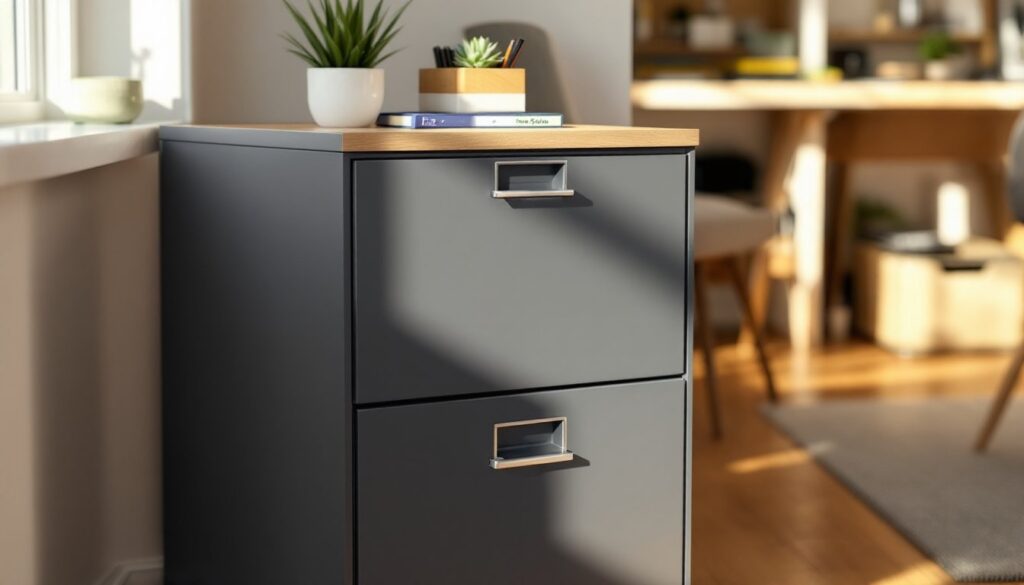
A cluttered workspace kills productivity faster than a dull saw blade dulls momentum. Whether it’s tax documents, warranties, craft supplies, or kids’ school records, paper and small items pile up fast. A small filing cabinet offers a compact, organized solution that fits tight spaces without sacrificing function. Unlike bulky office furniture, these units tuck under desks, slide into closets, or stand quietly in corners while keeping critical files accessible. For homeowners juggling DIY project plans, receipts, and household paperwork, a well-chosen filing cabinet can transform chaos into calm, and it doesn’t require a remodel to install.
Table of Contents
ToggleKey Takeaways
- A small filing cabinet is a compact storage solution (18–24 inches wide) that keeps essential documents, warranties, and household paperwork organized and accessible without consuming excessive space.
- Small filing cabinets come in multiple types—vertical, lateral, mobile, and under-desk models—each suited to different spaces and retrieval needs, with lateral units offering wider capacity while vertical models fit narrow areas.
- Choose a small filing cabinet with 18-gauge steel or better, full-extension ball-bearing drawer slides, and a locking mechanism appropriate to your security needs, testing drawers in-store whenever possible.
- Beyond document storage, small filing cabinets serve as versatile organizers for craft supplies, gardening seeds, kitchen overflow, kids’ school memories, and garage tools when you remove the hanging file rails.
- Proper placement is critical for daily use—position your small filing cabinet in high-traffic areas like home offices, kitchens, or bedrooms—and always anchor tall units to wall studs to prevent tip-over hazards.
- Fire-resistant small filing cabinets with UL 72 Class 350 ratings ($400+) protect irreplaceable documents like deeds and birth certificates from damage, offering peace of mind beyond what basic cardboard storage can provide.
What Is a Small Filing Cabinet and Why You Need One
A small filing cabinet is a compact storage unit designed to hold letter- or legal-size documents in an organized, accessible way. Typically 18–24 inches wide, these cabinets come in one- to three-drawer configurations and stand roughly 15–28 inches tall. Unlike full-size office models that can exceed 50 inches in height, small units are built for residential and tight commercial spaces.
They’re not just for paper. Modern small filing cabinets handle everything from file folders and binders to craft materials, small tools, and even seed packets for gardeners. The key benefit? Dedicated storage with a footprint smaller than most nightstands. They keep important documents protected from moisture, dust, and the chaos of daily life.
Homeowners need them because generic storage bins don’t cut it for items that require quick retrieval. A fire-resistant model (look for UL 72 Class 350 rating) protects irreplaceable documents like deeds, birth certificates, and insurance policies. Even basic steel models offer more security than a cardboard box shoved in a closet. If you’re managing a home office, a side business, or years of home improvement receipts, a small filing cabinet keeps you audit-ready and stress-free.
Types of Small Filing Cabinets for Different Spaces
Not all filing cabinets are created equal. The right type depends on your space constraints, storage volume, and how often you access files.
Vertical vs. Lateral Filing Cabinets
Vertical filing cabinets are the classic choice. Drawers run front-to-back, with files organized perpendicular to the front of the unit. A typical two-drawer vertical cabinet measures about 15 inches wide x 25 inches deep x 29 inches tall. These work well in narrow spaces, think alongside a desk, in a closet, or tucked into a hallway nook. The trade-off? You’ll sacrifice some capacity compared to lateral models.
Lateral filing cabinets orient files side-to-side, parallel to the front. A two-drawer lateral unit runs roughly 30–36 inches wide x 18 inches deep x 28 inches tall. They’re wider but shallower, which makes them ideal under windows or in shared spaces where depth is limited. Lateral drawers also let you see more file tabs at a glance, speeding up retrieval. But, they need more wall space.
For a short filing cabinet that doubles as a surface, a lateral model works beautifully. Top it with a cushion for extra seating or use it as a printer stand.
Mobile and Under-Desk Options
Mobile filing cabinets (also called pedestals) sit on casters and tuck under desks. Most measure 15–16 inches wide x 20 inches deep x 24 inches tall, fitting standard desk clearances of 25–27 inches. They’re perfect for home offices where floor space is tight. Look for models with locking casters to prevent accidental rolling and a top drawer with a lock for sensitive documents.
A mini filing cabinet with one or two drawers works for minimalists or renters who move frequently. These ultra-compact units (often 12–15 inches tall) handle active files, while archive boxes store older records. Pair one with wall-mounted shelving, and you’ve got a complete home office system that doesn’t eat up square footage.
Under-desk models often include a box drawer for office supplies on top and a file drawer below. This combo keeps pens, sticky notes, and staples separate from documents, reducing drawer clutter. Just verify the drawer slides are full-extension ball-bearing type, cheap slides bind halfway open, making it impossible to reach files in the back.
How to Choose the Right Small Filing Cabinet for Your Needs
Start with capacity. Count your current file folders and estimate future growth. A two-drawer vertical cabinet holds roughly 200–250 letter-size hanging folders, while a two-drawer lateral manages 300–350. If you’re digitizing old files (a smart move), you may only need a single drawer for active documents.
Next, check construction materials. 18–20 gauge steel is standard for budget models: it’ll handle everyday use but may dent if you drop a toolbox on it. 16-gauge steel is more durable and better for garages or workshops. Particleboard cabinets wrapped in laminate are lighter and cheaper but won’t survive a basement flood. If moisture is a concern, stick with steel and add a rust inhibitor.
Locking mechanisms matter. A cam lock (the round key type) is fine for keeping kids out of tax returns. For truly sensitive material, upgrade to a tubular lock or a model with a reinforced hasp for a padlock. Fire-resistant cabinets use insulated double walls and cost significantly more, expect to pay $400+ for a two-drawer UL-rated unit.
Drawer slides separate good cabinets from junk. Full-extension ball-bearing slides rated for 75–100 pounds per drawer are the gold standard. Test them in-store if possible: the drawer should glide smoothly without wobbling or requiring a hard yank. Cheap friction slides bind when loaded and fail within a year.
Measure your space with the drawer fully extended. A 25-inch-deep cabinet needs 40+ inches of clearance to open completely. Don’t forget vertical clearance if you’re sliding a cabinet under a desk, most need 26–28 inches.
Finally, consider aesthetics. Steel cabinets come in standard office colors (black, putty, gray) but also powder-coated finishes like white or navy. Wood-veneer models blend into traditional home offices, though they cost more and weigh less (a stability concern with top-heavy loads). If you’re following creative IKEA modifications for your workspace, look for cabinets with simple hardware you can easily replace or paint.
Creative Ways to Use Small Filing Cabinets Beyond Document Storage
A filing cabinet’s real superpower is versatility. Swap out hanging file rails, and you’ve got adjustable storage for dozens of non-paper uses.
Craft and sewing storage: Remove the rails and install shallow bins or drawer organizers. Store fabric, yarn, patterns, or scrapbooking supplies in labeled containers. The drawers keep materials dust-free and sorted by project. For step-by-step DIY organizer builds, many makers repurpose filing cabinets with custom dividers.
Tool and hardware organization: A two-drawer cabinet in the garage holds fasteners, drill bits, sandpaper, and hand tools. Use small parts organizers (the kind with removable trays) to subdivide drawers. Label the front of each drawer with a label maker. This beats digging through coffee cans on a shelf.
Seed and garden supplies: Gardeners use filing cabinets to store seed packets (organized alphabetically or by planting season), plant markers, gloves, and hand trowels. The top surface holds a tray for seedlings under a grow light.
Kitchen overflow: In small kitchens, a lateral filing cabinet can hold baking pans, cutting boards, and less-used appliances. Line drawers with non-slip shelf liner to prevent scratching and noise.
Kids’ art and school supplies: Dedicate one drawer per child for artwork, report cards, and school memories. The cabinet keeps sentimental items organized without taking over a closet. Paint the exterior with chalkboard paint so kids can label their own drawers.
Linen and bathroom storage: A mini filing cabinet in a bathroom closet holds rolled towels, toiletries, or cleaning supplies. The compact footprint works in tight powder rooms where traditional shelving won’t fit.
Before repurposing, check the drawer’s weight capacity, typically stamped on the slide hardware or listed in the manual. Overloading drawers warps slides and risks collapse. Most small cabinets max out at 50–75 pounds per drawer, so heavy items like canned goods or large tools may require reinforcement.
Best Locations to Place a Small Filing Cabinet in Your Home
Placement matters as much as the cabinet itself. Pick the wrong spot, and you’ll never use it. Here’s where small filing cabinets shine.
Home office or workspace: The obvious choice. Position it beside your desk within arm’s reach, or slide a mobile unit underneath. If you’re building a DIY desk using countertop material and legs, a two-drawer lateral cabinet can serve as one of the supports, just verify it’s rated for the load.
Bedroom closet: A vertical cabinet fits neatly in the back corner of most closets, freeing up dresser space for clothing. It’s ideal for personal paperwork, warranties, and manuals you need occasionally but don’t want cluttering the office.
Kitchen or mudroom: Store takeout menus, school calendars, bills, and coupons in a small cabinet near the command center of your home. A lateral unit doubles as a landing zone for keys and mail if you top it with a tray. Many home organization systems recommend centralizing household paperwork in high-traffic areas to reduce lost forms.
Garage or workshop: A steel filing cabinet holds project plans, appliance manuals, and receipts for tools and materials. Mount a pegboard above it for frequently used tools, and you’ve got an efficient DIY station.
Basement or utility room: If you’re storing long-term records (old tax returns, archived projects), a fire-resistant cabinet in the basement offers protection. Elevate it on a 2×4 lumber base to keep it off concrete floors prone to moisture. Use a dehumidifier to maintain 30–50% relative humidity and prevent mold.
Under stairs: That awkward triangular space under a staircase often goes unused. A short filing cabinet maximizes vertical storage without requiring custom shelving. Just measure the ceiling height carefully, some under-stair spaces taper quickly.
Safety note: Anchor tall cabinets to wall studs using 1/4-inch lag bolts and L-brackets rated for the cabinet’s weight. Loaded drawers shift the center of gravity forward: an un-anchored cabinet can tip if multiple drawers open simultaneously. This is especially critical in homes with kids or pets. Most manufacturers include a tip-over restraint kit, but if yours doesn’t, grab one from a hardware store for under $10.
Avoid placing cabinets in direct sunlight (fading and heat warping) or near HVAC vents (temperature swings cause metal to expand and contract, loosening joints over time).