Replacing your windows isn’t a weekend project you’ll tackle with a circular saw and a YouTube tutorial. It’s a significant investment that affects your home’s energy efficiency, curb appeal, and resale value, and it requires precision installation to avoid air leaks, moisture intrusion, and structural headaches down the road. The contractor you choose matters as much as the windows themselves. A sloppy install can turn premium triple-pane glass into a liability, while a skilled crew can make builder-grade vinyl perform like a champ. Whether you’re researching window replacement companies in your area or trying to distinguish genuine window replacement specialists from fly-by-night operators, this guide walks you through the process of vetting, comparing, and hiring the right team for your project.
Table of Contents
ToggleKey Takeaways
- Selecting the right window replacement company near you is critical, as poor installation can undermine even premium windows and lead to energy loss, condensation, and structural damage.
- Verify essential credentials including state licensing, general liability insurance ($1–2 million minimum), workers’ compensation, and at least a two-year workmanship warranty before hiring any window replacement contractor.
- Request at least three in-home estimates that include detailed measurements, sill condition assessments, and a breakdown of window specs (U-factor, SHGC, frame material) to compare apples-to-apples across proposals.
- Avoid red flags like pressure tactics, unusually low bids (30%+ below average), vague contracts lacking manufacturer part numbers, and cash-only payment schemes that indicate unprofessional or predatory operators.
- Proper window installation requires flashing, sill pans, low-expansion foam air sealing, and permit pulls—ask contractors explicitly how they handle these details rather than relying on generic assurances.
- Document everything in writing, inspect each installed window for smooth operation and clean caulk lines during the final walkthrough, and file warranty papers immediately to protect your investment.
Why Choosing the Right Window Replacement Company Matters
Window replacement sits at the intersection of carpentry, waterproofing, and thermal performance. Poor installation, improper shimming, insufficient flashing, skipped air sealing, can undercut even the best Energy Star-rated units. You’ll see higher utility bills, condensation between panes, drafts around sashes, and potential rot in the rough opening if moisture finds its way behind the trim.
Local replacement window companies familiar with regional building codes and climate considerations bring an edge here. A crew experienced with freeze-thaw cycles knows to use low-temperature sealants in cold climates: installers in hurricane zones understand impact-rated glazing and fastener schedules. National chains may offer competitive pricing, but they often subcontract installation to third-party crews with varying skill levels.
Beyond performance, there’s liability. Window openings are structural penetrations. If an installer damages a header, trims a king stud, or fails to maintain the load path, you’re looking at expensive repairs, and a potential fight over who pays. That’s why verifying credentials, insurance, and warranty terms isn’t optional: it’s the first filter in your search for window replacement services near you.
Essential Qualities to Look for in a Local Window Installer
Start with the non-negotiables: licensing, insurance, and a track record you can verify. Most jurisdictions require a general contractor or specialty home-improvement license for window replacement. Check your state or municipal licensing board, don’t just take the contractor’s word. Unlicensed operators may offer lower bids, but you lose recourse if the job goes sideways.
Ask for proof of general liability insurance (typically $1–2 million coverage) and workers’ compensation. If a crew member falls off a ladder on your property and the company lacks workers’ comp, you could be on the hook. Request certificates of insurance directly from the insurer, not photocopies that might be outdated.
Experience with your window type matters. Bay window replacement near me searches will surface generalists, but if you’re swapping a structural bay or bow unit, you want someone who’s handled load-bearing window assemblies and knows how to sister joists or install proper lintels. Same goes for historic homes: old sash-weight pockets, plaster returns, and non-standard rough openings require finesse you won’t find in a cookie-cutter replacement crew.
Reputation is verifiable. Platforms like Angi and similar services aggregate reviews, but also check the Better Business Bureau for complaint history and resolution patterns. A couple of negative reviews aren’t disqualifying, everyone has a bad day, but look for how the company responds. Do they address issues, or ghost unhappy customers?
Licensing, Insurance, and Warranty Coverage
Warranties come in two flavors: manufacturer and workmanship. The window itself, glass, frame, hardware, is covered by the manufacturer, often for 10–20 years on vinyl, longer on fiberglass or wood-clad units. But installation defects fall under the contractor’s workmanship warranty, which should be at least two years minimum. Some window replacement experts offer five or even lifetime labor warranties: read the fine print to see what’s excluded (normal wear, homeowner modifications, etc.).
Make sure the warranty is transferable if you sell the house, that’s a selling point for buyers. And confirm the company has been in business long enough to honor multi-year warranties. A two-year-old startup offering a 10-year labor guarantee is a red flag unless they’re bonded or backed by a larger entity.
How to Research and Compare Window Replacement Companies
Start local. Type “window replacement installers” or “door and window replacement near me” into search, but don’t stop at the first page of ads. Paid placements don’t equal quality. Scroll to the map pack (local results with reviews) and organic listings. Cross-reference names on multiple review sites, Google, Yelp, and niche platforms like ImproveNet for project cost benchmarks.
Request at least three in-home estimates. Phone quotes are ballpark at best: a real bid requires measuring rough openings, assessing sill condition, checking for rot or insect damage, and discussing ventilation (egress codes for bedrooms) and grid patterns. During the walkthrough, note whether the estimator measures carefully, asks about your energy goals, and explains options, or just pitches the most expensive package.
Compare apples to apples. One bid might include aluminum-clad wood windows with Low-E glass and argon fill: another offers vinyl double-hungs with standard glass. Break down the window specs (U-factor, SHGC, frame material), installation scope (interior/exterior trim, sill pans, flashing method), and cleanup/disposal. Some crews haul away old windows: others leave them curbside for you.
Ask what’s not included. Will they repair rotted sills or framing? Paint interior trim? Insulate gaps with low-expansion foam? These extras add up fast. Get it in writing so you’re not surprised by change orders mid-job.
Timing and availability matter. Busy seasons (spring, early fall) mean longer lead times. If a company can start tomorrow with no backlog, that’s either a slow period or a sign they’re struggling to retain customers. A 2–4 week wait for quality installers is normal in most markets.
Red Flags to Avoid When Hiring a Window Contractor
Pressure tactics top the list. If a salesperson insists you sign today to lock in a “special discount” or claims materials are about to spike in price, walk away. Legitimate companies don’t strong-arm. Limited-time offers are marketing theater: real pricing fluctuates with supplier contracts, but rarely overnight.
Unusually low bids often signal corner-cutting, outdated or off-brand windows, skeleton crews rushing jobs, or an intent to collect a deposit and vanish. If one estimate is 30% below the others, dig into what’s different. Cheap vinyl frames warp in sunlight: thin glass units fail faster: improper flashing voids warranties.
No physical address or local references is another warning sign. Fly-by-night operators use PO boxes or out-of-state phone numbers. Ask for recent local jobs you can drive by (with the homeowner’s permission) or speak to past clients. A company that’s been around has a trail: ghosting that request means they don’t have one.
Vague contracts leave you exposed. The agreement should specify window models (including manufacturer part numbers), glass coatings, frame colors, installation method (insert replacement vs. full-frame), start and completion dates, payment schedule, and warranty terms. “Standard windows, professionally installed” isn’t enforceable.
Cash-only or full payment upfront is a classic scam. Standard practice is a deposit (often 10–30%) to order materials, progress payments tied to milestones, and final payment upon completion and your sign-off. Never pay in full before the job starts, and always get a lien waiver to protect against unpaid subcontractor or supplier claims.
Questions to Ask Before Signing a Contract
Drill into the details with these questions:
- “Are you doing the install, or subcontracting it?” If it’s a sub crew, ask for their credentials too. You want to know who’s actually touching your house.
- “What’s your process for handling rot or structural issues?” Window openings often hide surprises, damaged headers, sill rot, pest damage. Confirm whether discovery triggers a change order or if preliminary inspection is included.
- “How do you handle flashing and air sealing?” Proper window replacement uses a sill pan (metal or membrane) to catch water, head and jamb flashing integrated with the weather-resistant barrier, and low-expansion foam or backer rod with sealant at the perimeter. If they shrug or say “we caulk it,” that’s not enough.
- “What U-factor and SHGC ratings do these windows carry?” U-factor measures heat loss (lower is better: 0.30 or below for cold climates): Solar Heat Gain Coefficient (SHGC) measures solar radiation (0.25–0.40 for hot climates to block heat, higher in cold climates to gain passive warmth). If the estimator can’t answer, they’re not selling performance.
- “Do you pull permits?” Window replacement often requires permits, especially for egress windows in bedrooms (minimum 5.7 sq ft opening, 24″ high, 20″ wide, sill max 44″ above floor per IRC). A reputable contractor handles permitting and inspections: skipping them can complicate insurance claims or resale.
- “What’s your cleanup and disposal process?” Old windows, packing materials, and trim debris add up. Confirm whether haul-away is included or if you need to rent a dumpster.
Document everything. If they promise a specific window model or upgrade verbally, add it to the contract as an amendment before signing.
What to Expect During the Window Replacement Process
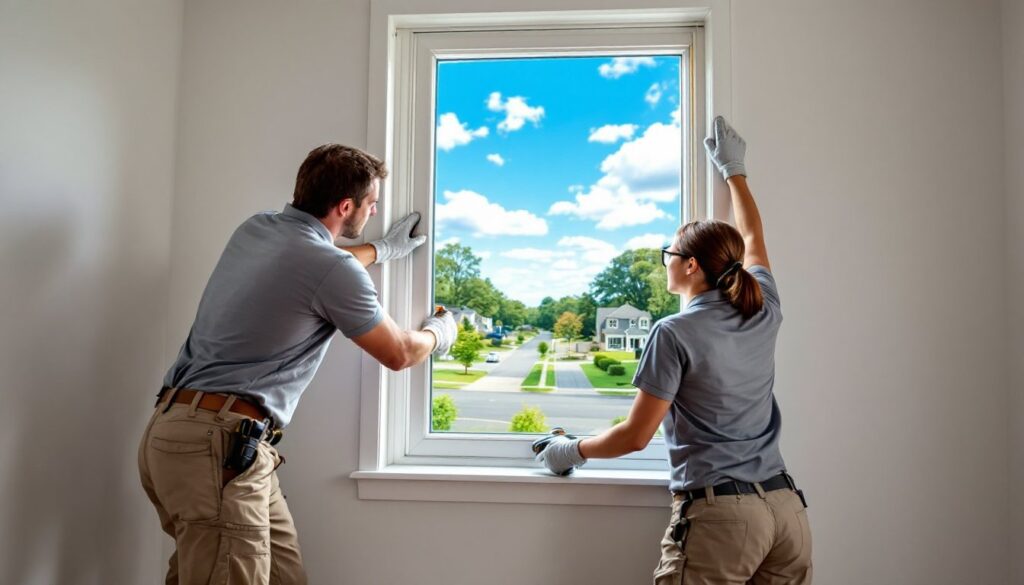
A typical single-window replacement takes 30 minutes to 2 hours, depending on condition and whether it’s insert (new sash in existing frame) or full-frame (remove down to rough opening). A whole-house job might span 1–3 days for an average-sized home.
Day one usually starts with protecting floors (drop cloths, ram board) and removing interior trim, casing, apron, stool. The old window comes out: the crew inspects the rough opening, confirms it’s square and level (shimming as needed), and checks for rot or insect damage. If the sill or jack studs are compromised, installation pauses for repairs.
Proper installation includes applying a sill pan (pre-formed metal or peel-and-stick membrane) that laps up the jambs, setting the window with shims at the sill and head (never over-tightening fasteners, which can bow the frame and bind the sash), and integrating flashing tape at the head and jambs with the house wrap or building paper. Gaps get filled with low-expansion foam, not the big-box stuff that can warp frames. Interior and exterior trim go back (or new trim if you’re upgrading), caulked and painted.
Safety note: Window work involves lifting heavy units (a standard double-hung can weigh 40–80 lbs: bays and bows push 200+ lbs), working at heights, and power tools in tight spaces. Pros should wear cut-resistant gloves when handling glass, eye protection for demolition and cutting, and use fall protection (harnesses, guardrails) on second stories. If they skip PPE, that’s a professionalism red flag.
Once install wraps, do a walkthrough. Open and close every sash, smooth operation, no binding. Check locks and latches. Inspect caulk lines (clean, uniform beads). Look for gaps around trim. Test the tilt-in feature on double-hungs. If anything’s off, note it before final payment.
Most window replacement companies near you will schedule a final walk-through and provide care instructions (when to remove protective film, how to clean Low-E glass, lubrication schedules for hardware). File your warranty paperwork, both manufacturer and workmanship, along with the contract and any permits. If you used resources like HomeAdvisor to find installers, leave an honest review to help the next homeowner.
Your new windows should deliver immediate comfort improvements, less drafts, quieter interiors, easier operation, and long-term savings through lower heating and cooling costs. If you notice condensation between panes, air leaks, or operational issues within the first year, contact the installer promptly. Most workmanship problems show up early and are covered under warranty, but only if you report them before the coverage window closes.