Dyson air purifiers have carved out a reputation for sleek engineering and powerful filtration, but here’s the reality: the machine is only as good as the filter inside it. A clogged or degraded filter doesn’t just reduce performance, it can recirculate pollutants you’re trying to eliminate. Whether you’ve noticed weaker airflow, a persistent indicator light, or you’re just wondering how often to swap filters, understanding your unit’s filtration system is essential for maintaining indoor air quality. This guide walks through everything from identifying when your filter needs attention to proper dyson air purifier filter replacement procedures, so you can keep your home’s air genuinely clean.
Table of Contents
ToggleKey Takeaways
- Dyson air purifier filters use a sealed multi-stage HEPA and activated carbon system that traps 99.97% of particles and odors but cannot be washed or reused, requiring timely replacement.
- Replace your Dyson air purifier filter every 12 months under normal use, or sooner (8-10 months) in homes with pets, high pollen, or continuous operation due to accelerated wear.
- Watch for declining airflow, persistent odors, increased noise, or visual dust accumulation as signs your filter needs replacement; smart models provide automatic notifications.
- Filter replacement takes five minutes without tools—power off the unit, twist-release the cover, lift out the old filter, and insert the new one until it clicks into place.
- Only the exterior grille and housing can be cleaned with a dry cloth; attempting to wash HEPA pleats or carbon layers damages the filter and compromises indoor air quality.
- Buy genuine Dyson replacement filters from authorized retailers like Dyson.com, Amazon, or big-box stores to ensure proper fit and performance; expect to budget $60-$80 annually per unit.
Understanding Your Dyson Air Purifier Filter System
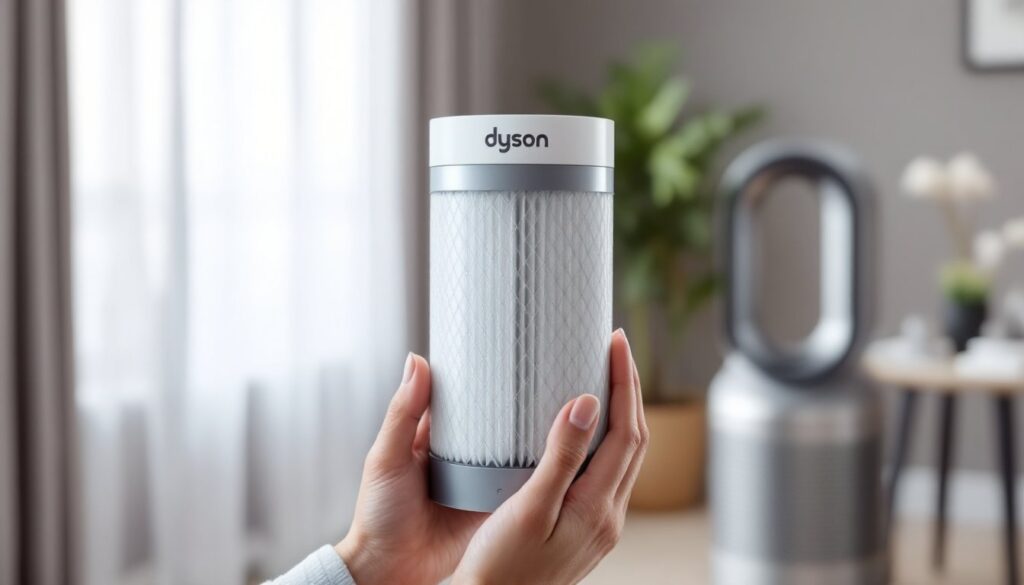
Most Dyson air purifiers use a multi-stage filtration setup combining a sealed HEPA filter with an activated carbon layer. The HEPA component traps 99.97% of particles as small as 0.3 microns, think pollen, dust mites, mold spores, and pet dander. The activated carbon layer tackles gases, odors, and volatile organic compounds (VOCs) from paint, cleaning products, or cooking.
Dyson models like the Pure Cool, Pure Hot+Cool, and the newer Purifier series typically house filters in a cylindrical drum that wraps around the base. Some units feature a 360-degree glass HEPA filter combined with a separate activated carbon filter, while newer models integrate both into a single sealed unit. Check your manual or the filter housing label to confirm which type you have, this matters when ordering replacements.
The filters are not washable or reusable in the traditional sense. Dyson engineers designed them as sealed systems to prevent contamination during handling. Attempting to vacuum or rinse HEPA media can damage the pleated structure and compromise filtration efficiency. This is why dyson air purifier filter replacement is a necessary maintenance task, not optional upkeep.
Understand that these filters operate in a closed-loop airflow system. Air enters through perforations at the base, passes through the filter media, and exits via the bladeless multiplier loop or vents. If the filter becomes saturated with particulates or carbon pores fill with VOCs, the unit’s motor has to work harder, reducing lifespan and increasing energy consumption.
How to Know When Your Dyson Filter Needs Replacing
Dyson purifiers with LCD displays or app connectivity track filter life automatically. You’ll see a countdown based on runtime and air quality sensor data. When the filter icon flashes or the app sends a notification, it’s time to order a replacement, typically around 12 months of use under normal conditions.
If your unit lacks smart features, watch for these indicators:
- Reduced airflow: The purifier runs but produces noticeably weaker circulation, even at higher speeds.
- Persistent odors: If the unit no longer neutralizes cooking smells or pet odors, the activated carbon layer is likely exhausted.
- Increased noise: A laboring motor often signals restricted airflow from a clogged filter.
- Visual inspection: Remove the filter and check for discoloration, heavy dust accumulation, or a grayish tint on the HEPA pleats.
Independent testing by organizations that evaluate top-rated air purifiers confirms that filter performance degrades significantly after the manufacturer’s recommended replacement interval, even if the unit still runs. Don’t rely solely on the machine operating, air quality sensors measure particulates, not filter condition.
Environmental factors accelerate wear. Homes with pets, smokers, high pollen counts, or ongoing renovations will clog filters faster than average. If you run your purifier 24/7 in a workshop or basement with elevated dust, consider replacing filters every 8-10 months instead of waiting the full year.
Step-by-Step: Replacing Your Dyson Air Purifier Filter
Replacing a Dyson filter takes about five minutes with no tools required. Work on a clean surface to avoid contaminating the new filter or spreading collected dust.
Materials you’ll need:
- Genuine Dyson replacement filter (model-specific)
- Microfiber cloth (for wiping the housing)
- Trash bag (for disposing of the old filter)
Safety note: Wear a dust mask if you have allergies or respiratory sensitivities. Used HEPA filters contain concentrated allergens and particulates.
Step-by-step process:
- Power off and unplug the unit. Never service the purifier while it’s connected to power.
- Remove the outer shell or filter cover. Most Dyson models have a twist-lock or button-release mechanism at the base. Rotate counterclockwise about 90 degrees or press the release tabs simultaneously.
- Extract the old filter. Lift straight up, some models have a handle or grip molded into the filter body. Avoid shaking or tapping it, as this releases captured particles.
- Dispose of the filter immediately. Seal it in a trash bag. Do not attempt to clean or reuse it.
- Wipe the filter housing. Use a dry or lightly dampened microfiber cloth to remove dust from the inner chamber and seals. Don’t use cleaning sprays, residue can interfere with the new filter.
- Unwrap the new filter. Remove all protective packaging, including any plastic caps or seals covering the filter ports.
- Insert the new filter. Align any tabs or notches with the housing guides and press down firmly until it seats. You should feel or hear a click.
- Reattach the cover. Rotate clockwise or snap the outer shell back into place.
- Reset the filter timer. On models with displays, hold the power button and filter reset button simultaneously for 5-10 seconds until the indicator clears. App-connected units update automatically after detecting the new filter.
Reviews from experts evaluating Dyson’s best-performing models emphasize that proper installation is critical, an improperly seated filter creates bypass gaps that allow unfiltered air to circulate.
Cleaning vs. Replacing: What Your Filter Actually Needs
There’s persistent confusion about cleaning Dyson filters, partly because older Dyson vacuums had washable pre-filters. Air purifier filters are different.
The HEPA and activated carbon filters are not washable. Water damages the pleated HEPA media and renders activated carbon ineffective. Dyson’s sealed filter design means you can’t separate the layers for cleaning without destroying the unit’s integrity.
What you can clean is the exterior grille and housing. Wipe down the perforated base and outer casing monthly with a dry microfiber cloth or use a vacuum with a brush attachment to remove surface dust. This prevents buildup that restricts airflow before air even reaches the filter.
Some users attempt to extend filter life by vacuuming the HEPA pleats with a soft brush attachment. While this removes surface dust, it doesn’t restore filtration capacity, particles are embedded deep in the media, and carbon pores remain saturated. You might gain a week or two, but you’re compromising air quality.
Dyson’s engineering spec requires full filter replacement, not maintenance cleaning. The sealed construction prevents contamination during handling, but it also means there’s no DIY workaround. Budget for replacement filters as an ongoing cost of ownership, similar to furnace filters or water pitcher cartridges.
Maximizing Filter Life and Performance
You can’t make filters last forever, but smart operation extends their effective lifespan and maintains air quality between replacements.
Pre-filter surface maintenance: Vacuum the outer grille and perforations every 2-3 weeks using a brush attachment. This prevents large debris from clogging the filter prematurely.
Run the purifier strategically: Continuous operation provides the best air quality, but if budget or noise is a concern, run the unit during high-pollution periods, cooking, cleaning with chemicals, or when windows are open during pollen season. Use auto mode on smart models to let sensors modulate speed based on real-time air quality.
Control indoor pollutants at the source:
- Use exhaust fans when cooking to reduce grease and odor load.
- Remove shoes at entry points to minimize tracked-in dust and particulates.
- Groom pets outdoors when possible to reduce dander and fur.
- Store VOC-emitting products (paint, solvents, cleaning supplies) in sealed containers or well-ventilated areas.
Placement matters: Position the purifier at least 3-4 feet from walls or furniture to ensure unrestricted airflow. Avoid corners or tight spaces that create dead zones. Place units in high-traffic areas or bedrooms where you spend the most time.
Monitor humidity: Excessive moisture can cause filters to degrade faster or promote mold growth on HEPA media. Maintain indoor relative humidity between 30-50% using dehumidifiers or ventilation.
Analysis from sources reviewing Dyson’s filtration technology shows that units placed in optimal conditions with regular exterior cleaning can reach the full 12-month filter lifespan, while poorly maintained units may require replacement as early as 8 months.
Where to Buy Genuine Dyson Replacement Filters
Genuine Dyson filters ensure proper fit, filtration standards, and warranty compliance. Third-party knockoffs may appear identical but often use lower-grade HEPA media or inferior carbon that doesn’t meet Dyson’s sealed system specifications.
Authorized retailers:
- Dyson.com: Direct from the manufacturer. Filters are model-specific, so use your purifier’s serial number or model name to confirm compatibility. Expect to pay $60-$80 for combination HEPA/carbon filters as of early 2026, though prices vary by model and region.
- Amazon: Verify the seller is listed as “Dyson Official” or “Ships from and sold by Amazon.com.” Third-party marketplace sellers occasionally list counterfeit filters with fake branding.
- Big-box retailers: Home Depot, Lowe’s, Best Buy, and Target stock Dyson filters in-store and online. Check availability for your specific model before driving out.
- Appliance specialty stores: Local vacuum and air quality shops sometimes carry Dyson parts and can special-order less common models.
Identifying genuine filters:
Authentic Dyson filters include a holographic authenticity label on the packaging, a molded Dyson logo on the filter body, and precise fit with no gaps or loose seals. The packaging lists the compatible model numbers, cross-reference with your purifier’s label.
Subscription options: Dyson and some retailers offer filter subscription services that ship replacements automatically every 12 months. This ensures you never miss a replacement cycle and sometimes includes a small discount (typically 5-10%).
Cost considerations: Budget $60-$80 annually per purifier for replacement filters. If you run multiple units or operate in high-pollution environments requiring more frequent changes, factor this into your total cost of ownership. Buying in multipacks when on sale can reduce per-unit cost slightly.
Conclusion
Dyson air purifiers deliver on their promise only when filters are properly maintained and replaced on schedule. Don’t ignore the replacement indicator or try to stretch a filter beyond its capacity, you’re paying for a machine that’s no longer doing its job. Budget for annual replacements, follow the straightforward swap procedure, and focus on source control and smart placement to maximize filter life. Clean indoor air isn’t passive: it’s the result of consistent, informed maintenance.