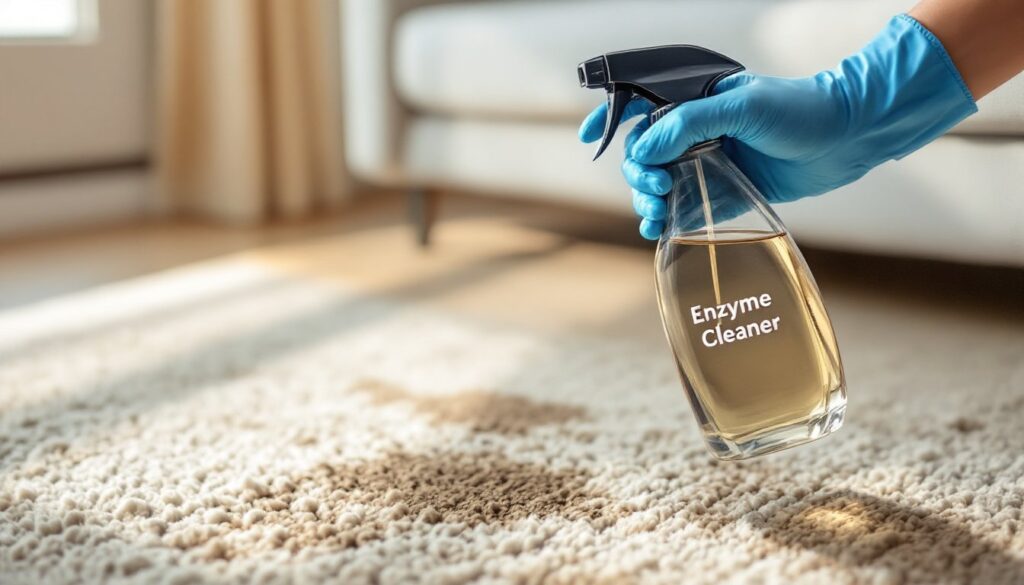
When your dog has an accident on the living room carpet or a glass of red wine tips over during dinner, traditional cleaners often mask the problem rather than solve it. You’re left with lingering odors that resurface on humid days and stains that never quite disappear. Enzymatic carpet cleaners work differently, they break down organic matter at the molecular level, digesting the source of stains and smells instead of just covering them up. For homeowners dealing with pet messes, food spills, or mystery odors in high-traffic areas, enzyme-based carpet cleaners offer a biological approach that gets results where scrubbing and steam cleaning fall short.
Table of Contents
ToggleKey Takeaways
- Enzyme carpet cleaners break down organic matter at the molecular level using biological catalysts like proteases, amylases, and lipases, eliminating stains and odors at their source rather than masking them.
- Enzyme cleaners outperform traditional methods on pet accidents, food spills, and organic stains because they completely dissolve uric acid crystals and proteins, preventing ghost stains and recurring odors that chemical cleaners leave behind.
- Maximize enzyme carpet cleaner effectiveness by allowing 10-15 minutes of dwell time minimum, keeping the area wet, maintaining room temperature between 60-80°F, and avoiding mixing with other cleaning products that can deactivate enzymes.
- Pet urine and food-based stains respond best to enzyme cleaners, but these products won’t work on inorganic stains like mud, rust, or ink, making them a specialized tool for specific carpet problems.
- Select high-quality enzyme cleaners by checking for multiple enzyme types (protease, amylase, lipase), CRI certification, pH-neutral formulas, and products without bleach or ammonia, typically priced $15-50 per gallon.
- Use a UV flashlight to identify old pet stains invisible to the eye before treating with enzyme cleaner, and treat spills immediately since organic matter penetrates carpet backing quickly, making fresh accidents easier to resolve.
What Is Enzyme Carpet Cleaner and How Does It Work?
An enzyme carpet cleaner contains specific proteins called enzymes that act as biological catalysts, speeding up the breakdown of organic compounds like proteins, fats, and starches. Unlike chemical cleaners that rely on surfactants or solvents to lift stains, enzymes target the molecular bonds in organic matter, literally digesting urine, blood, vomit, food particles, and other biological messes.
The most common enzymes in carpet cleaners include:
- Proteases: Break down protein-based stains (blood, egg, dairy, body fluids)
- Amylases: Digest starches and carbohydrates (pasta sauce, cereal, bread)
- Lipases: Attack fats and oils (grease, butter, cooking oil)
- Cellulases: Target plant fibers and some food residues
When you apply an enzymatic carpet cleaner to a stain, the enzymes attach to the organic molecules and break them into smaller, water-soluble particles. This process continues as long as the cleaner remains wet and the temperature stays within the 60-90°F range where most enzymes function best. That’s why enzyme cleaners need dwell time, typically 10-15 minutes minimum, to work effectively.
The bacteria in some enzyme-based formulations produce additional enzymes as they consume the organic matter, creating a self-sustaining cleaning action. This is particularly effective on porous carpet backing and pad materials where odor-causing compounds seep deep below the surface fibers.
Why Enzyme Cleaners Outperform Traditional Carpet Cleaning Methods
Traditional carpet shampoos and steam cleaners work primarily through mechanical action and heat, lifting surface-level dirt and debris. They excel at general soil removal but struggle with organic stains that penetrate deep into carpet fibers and backing. Here’s where enzyme cleaners gain the advantage:
Chemical cleaners often contain harsh surfactants that can leave residue in carpet fibers. This residue actually attracts dirt over time, making carpets look dingy faster. Enzyme cleaners break down completely into harmless byproducts, mostly carbon dioxide and water, leaving no sticky film behind.
Odor elimination is where the difference becomes most obvious. When homeowners use perfumed cleaners or odor neutralizers on pet urine, they’re only masking the smell. The uric acid crystals in urine are insoluble in water and won’t respond to soap or steam. Enzymes physically break down these crystals, eliminating the odor source rather than covering it. Many cleaning hacks suggest vinegar or baking soda for pet accidents, but these household remedies can’t match the targeted action of proteases designed specifically to digest uric acid.
Safety profile matters, especially in homes with kids and pets. Most enzyme carpet cleaners are non-toxic and hypoallergenic. They don’t contain chlorine bleach, ammonia, or volatile organic compounds (VOCs) that can irritate respiratory systems. You won’t need heavy-duty ventilation or protective gloves during application.
Cost efficiency over time also favors enzymes. Because they eliminate stains at the source, you’re not re-treating the same spots every few weeks. One thorough application typically resolves the issue, whereas chemical cleaners often require multiple attempts and still leave ghost stains visible under UV light.
The main limitation: enzyme cleaners only work on organic stains. They won’t touch mud, rust, ink, or synthetic dyes. For those, you’ll still need conventional stain removers.
Best Uses for Enzyme Carpet Cleaners in Your Home
Enzyme-based carpet cleaners shine in specific scenarios where organic matter is the culprit. Here’s where homeowners get the most value:
Pet Stains and Odors
Dog and cat urine represents the most common, and most challenging, carpet problem enzyme cleaners solve. Fresh accidents should be blotted immediately with paper towels (press down firmly to absorb liquid from the carpet pad). Apply the enzymatic carpet cleaner liberally, extending 2-3 inches beyond the visible stain perimeter. The urine likely spread wider than you can see.
For old or set-in pet stains, enzyme cleaners still work, but they need more dwell time. Saturate the area thoroughly, you may need to work the cleaner into the carpet backing with a soft-bristle brush. Cover the wet area with plastic wrap to prevent evaporation and let it sit for 30-60 minutes. The longer contact time gives enzymes more opportunity to break down crystallized uric acid.
Vomit and feces also respond well to enzyme treatment. Remove solid matter with a plastic scraper or old spatula, then blot liquids. The proteases and amylases in quality enzyme cleaners will digest the remaining organic residue and neutralize the accompanying odors.
A UV flashlight (available for under $15) helps identify old pet stains invisible to the naked eye. Urine glows yellow-green under UV light, revealing the true extent of contamination.
Food and Beverage Spills
Milk, juice, coffee, wine, and protein-rich foods leave behind sugars and organic compounds that attract bacteria and cause persistent odors as they decompose in carpet fibers. When tackling these spills with an enzyme based carpet cleaner, act quickly for best results.
Wine and coffee contain tannins that bond to carpet fibers, but they also include sugars and organic acids that enzymes can break down. Blot the spill, then apply enzyme cleaner. The amylases will digest the sugar content while other cleaning agents lift the tannin staining.
Baby formula, milk, and dairy products create especially stubborn odors if not fully removed. Even after the visible stain disappears, the milk proteins in carpet padding can sour and smell rancid. Enzyme cleaners with strong proteases eliminate this problem by digesting the protein molecules completely.
Most homeowners benefit from keeping a spray bottle of enzyme cleaner in the laundry room for immediate response to spills. The sooner you treat a stain, the less time organic matter has to penetrate deep into carpet backing where it’s harder to reach. Professional guidance from sources like Martha Stewart often emphasizes this prompt-treatment approach for maintaining carpet longevity.
How to Use Enzyme Carpet Cleaner for Maximum Results
Enzyme cleaners require a different application method than conventional carpet shampoos. Follow these steps for optimal stain and odor removal:
-
Test for colorfastness in an inconspicuous area (inside a closet or under furniture). Apply a small amount, wait 10 minutes, and blot with a white cloth. If no dye transfers, proceed.
-
Remove excess material by blotting liquids with paper towels or scraping solids with a plastic scraper. Work from the outside of the stain toward the center to avoid spreading.
-
Apply enzyme cleaner generously. Don’t be stingy, you need enough product to penetrate through carpet fibers into the backing and pad where odor-causing bacteria thrive. For a typical pet accident, use 8-12 ounces of cleaner.
-
Work it in with a soft-bristle brush or your fingers (wear gloves if preferred). Agitate gently to help the solution reach deep fibers without damaging carpet texture.
-
Allow adequate dwell time. This is critical. Enzymes need 10-15 minutes minimum to work: stubborn stains may require 30-60 minutes. Keep the area wet during this period. If it starts drying, mist with water.
-
Blot, don’t rinse. Unlike chemical cleaners, you don’t want to rinse away enzyme cleaners immediately. The enzymatic action continues as long as the product is present. After the dwell time, blot up excess moisture with clean towels.
-
Air dry completely. Use fans to speed drying if needed. Avoid walking on the treated area until it’s fully dry (typically 4-6 hours).
-
Repeat if necessary. Heavily soiled areas or old stains might need a second treatment. If odor persists after drying, apply another round of enzyme cleaner.
Temperature matters: Keep the room between 60-80°F during treatment. Enzymes become less effective in cold temperatures and can denature (lose effectiveness) above 90°F.
Avoid contamination: Don’t mix enzyme cleaners with other products. Chemical cleaners, especially those containing bleach or ammonia, will deactivate enzymes. If you’ve previously treated an area with a chemical cleaner, rinse it thoroughly before applying enzyme solution.
For whole-room applications or severe contamination (like a house with multiple pet accidents), consider using a carpet cleaning machine designed for enzyme solutions. Standard steam cleaners run too hot and will denature the enzymes, making them useless. Look for cold-water extraction machines or apply enzymes separately before steam cleaning.
Choosing the Right Enzyme Carpet Cleaner for Your Needs
Not all enzyme cleaners are created equal. Here’s what to look for when selecting a product:
Enzyme concentration and variety: Higher-quality products list specific enzymes (protease, amylase, lipase) rather than just “enzymes” on the label. Multi-enzyme formulas handle a broader range of stains than single-enzyme products. Check that the concentration is sufficient, some bargain cleaners are so diluted they’re barely effective.
Bacterial cultures: Some enzymatic carpet cleaners include beneficial bacteria that produce enzymes continuously as they consume organic matter. These bio-enzymatic formulas work especially well on deep or old stains because the bacteria keep generating fresh enzymes over several hours.
pH level: Look for pH-neutral or slightly alkaline formulas (pH 7-9). Highly acidic or alkaline cleaners can damage carpet fibers and backing adhesives over time.
Scent: Unscented or lightly scented options work best. Heavy fragrances don’t indicate cleaning power, they’re just masking agents. If you can still smell perfume after the carpet dries, the product left residue behind.
Safety certifications: Products certified by the Carpet and Rug Institute (CRI) have been tested for effectiveness and safety on various carpet types. Look for the CRI Seal of Approval if you have expensive wool or specialty fiber carpeting.
Application format: Spray bottles work well for spot treatments and small areas. For whole-room applications or severe pet damage, buy concentrate that you can dilute in a carpet cleaning machine or pump sprayer. The concentrate typically offers better value per ounce.
Intended use: Some enzyme cleaners target specific stains. Pet-specific formulas emphasize proteases for urine and feces. Food-stain removers may have stronger amylases. General-purpose formulas balance all enzyme types.
Avoid products that contain:
- Bleach or oxidizers (incompatible with enzymes)
- High levels of surfactants (can leave residue)
- Artificial dyes (serve no cleaning purpose and may stain)
Many comprehensive home guides recommend reading user reviews specifically from people dealing with your type of stain. A cleaner that excels at wine spills might not be the best choice for cat urine, and vice versa.
Price varies widely, from $8 for a 32-ounce spray bottle to $40 for professional-grade concentrates. As a general guideline, expect to pay $15-25 for a quality gallon of ready-to-use enzyme cleaner or $30-50 for a gallon of concentrate that dilutes to multiple gallons. The investment pays off in fewer repeat treatments and longer carpet life.
Store enzyme cleaners in a cool, dark place. Heat and direct sunlight can degrade enzymes over time, reducing effectiveness. Most products remain viable for 1-2 years when stored properly, but always check the expiration date before use.