When your refrigerator conks out, the last thing you need is a fight over warranty coverage. Whirlpool stands behind their appliances with a standard manufacturer’s warranty, but understanding what’s actually covered, and what isn’t, can save you hundreds of dollars and a lot of frustration. Whether you’ve just bought a new unit or you’re troubleshooting a problem with your existing fridge, knowing how to navigate warranty claims, exclusions, and coverage timelines puts you in control. This guide walks through everything homeowners need to know about Whirlpool refrigerator warranties in 2026, from filing claims to protecting your coverage through proper maintenance.
Table of Contents
ToggleKey Takeaways
- Whirlpool refrigerator warranty provides one year of full coverage for parts and labor on manufacturing defects, with an extended five-year warranty on the sealed refrigeration system.
- Warranty claims require proof of purchase, model/serial numbers, and must be filed through Whirlpool’s authorized service network to avoid coverage denial.
- Common exclusions include improper installation, cosmetic damage, normal wear and tear, unauthorized repairs, and damage from power surges or acts of nature.
- Regular maintenance—such as cleaning condenser coils every six months, checking door seals, and replacing water filters on schedule—is essential to protect your warranty and prevent costly compressor failures.
- Extended warranty plans from Whirlpool or third-party providers typically cost $150–$400 and can be worth considering, as major repairs like compressor replacement can exceed $500–$1,000.
- Keep detailed records of all service visits and maintenance performed, as documentation strengthens warranty claims and protects you against future disputes.
What Does the Whirlpool Refrigerator Warranty Cover?
Whirlpool’s standard limited warranty covers defects in materials and workmanship under normal household use. That means if a component fails because of a manufacturing flaw, not user error or wear and tear, Whirlpool will repair or replace it at no cost to the owner.
Covered components typically include:
- Compressor and sealed refrigeration system: This is the heart of your fridge. Failures here are expensive, so Whirlpool often extends coverage on the sealed system beyond the standard warranty period.
- Electronic controls and thermostats: Digital displays, temperature sensors, and control boards are included.
- Ice makers and water dispensers: Internal mechanisms are covered, though water line issues outside the appliance are not.
- Shelving, door bins, and interior components: If a part breaks due to a defect, it’s covered.
- Fans, defrost systems, and lighting: Mechanical and electrical components that fail prematurely fall under warranty.
Whirlpool covers both parts and labor during the warranty period when service is performed by an authorized technician. They won’t reimburse you for hiring an independent repair person unless you get prior approval, so always start with Whirlpool’s service network.
It’s worth noting that some manufacturers, including those making highly rated kitchen appliances, have begun extending sealed system warranties to five or even ten years. Check your specific model’s documentation, coverage can vary between product lines.
How Long Is the Whirlpool Refrigerator Warranty Valid?
Whirlpool’s standard limited warranty runs for one year from the date of original purchase. This covers parts and labor for any manufacturing defects that arise during that period.
Beyond the first year, many Whirlpool refrigerators include an extended sealed system warranty that typically lasts five years from the original purchase date. This covers the compressor, evaporator, condenser, dryer, and connecting tubing, but labor costs are on you after year one. You’ll pay the service call and technician’s time, but Whirlpool supplies the replacement part.
Warranty periods start from the original date of purchase, not the installation date or the date you moved into a home with an existing appliance. If you bought a house with a Whirlpool fridge already installed, the warranty clock started ticking when the previous owner made the purchase. Always ask for appliance documentation during a home sale.
For commercial or rental property use, warranties may be shorter or void entirely. Whirlpool’s standard coverage applies to normal household use only. If you’re installing a unit in a rental, check whether your policy still applies, many manufacturers exclude multi-family or commercial applications.
Some retailers offer their own protection plans that run concurrently with the manufacturer warranty. These aren’t the same as Whirlpool’s coverage and often come with different claim procedures and exclusions.
What’s Not Covered Under Whirlpool’s Standard Warranty?
Warranties sound great until you hit an exclusion. Whirlpool’s standard policy has several common carve-outs that trip up homeowners.
Damage from improper installation isn’t covered. If the fridge wasn’t level, the water line leaked because of a bad connection, or the unit wasn’t properly vented, you’re on your own. Always hire a qualified installer or follow the installation manual to the letter.
Cosmetic damage like scratches, dents, or discoloration doesn’t fall under warranty unless it affects functionality. That also includes damage from cleaning with abrasive chemicals or improper maintenance.
Normal wear and tear is excluded. Door seals that lose their grip after years of use, light bulbs that burn out, and water filters that need replacing are considered consumables. You’ll pay out of pocket for these.
Service calls that find no defect may result in a charge. If a technician shows up and discovers you just had the temperature set wrong or forgot to plug the unit in, expect a service fee. Many appliance troubleshooting guides can help you rule out user error before calling for service.
Damage from power surges, voltage issues, or acts of nature isn’t covered. Lightning strikes, floods, and electrical problems fall outside the warranty scope. Homeowner’s insurance may cover these events.
Modifications or unauthorized repairs void the warranty entirely. If you or an unlicensed technician opens the sealed system or alters factory components, Whirlpool can deny future claims.
Moving and reinstallation costs aren’t covered, even if the fridge is under warranty when you relocate. You’ll also lose coverage if the unit is resold or transferred unless the new owner is within the original warranty period and can provide proof of purchase.
Similar exclusions apply across major appliance categories. If you’re comparing coverage, note that the whirlpool dishwasher warranty follows the same basic structure: one year full coverage, extended sealed system protection, and exclusions for misuse and wear.
How to File a Whirlpool Refrigerator Warranty Claim
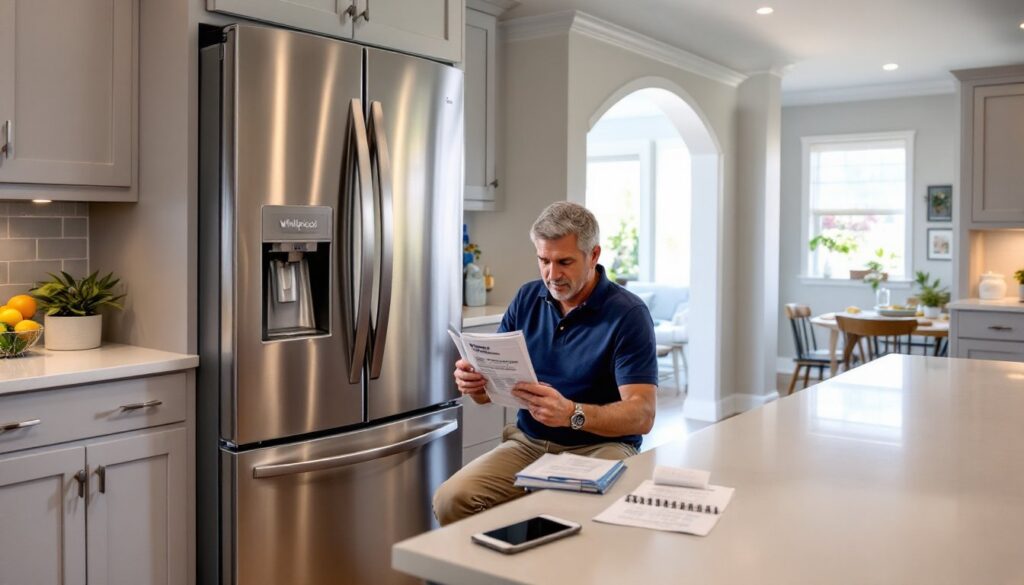
Filing a warranty claim is straightforward if you have your paperwork in order. Start by gathering your proof of purchase (receipt or invoice showing the date) and your model and serial numbers. You’ll find these on a sticker inside the fridge, usually on the side wall or ceiling of the fresh food compartment.
Contact Whirlpool customer service by phone or through their website. Have your information ready, model number, serial number, purchase date, and a clear description of the problem. Whirlpool will verify your warranty status and schedule service if you’re covered.
Whirlpool uses a network of authorized service providers. They’ll assign a technician in your area and provide a service appointment window. Don’t hire your own repair person before talking to Whirlpool, or you may lose coverage.
When the technician arrives, they’ll diagnose the issue and determine whether it’s a warrantable defect. If it is, they’ll order parts (if needed) and complete the repair at no charge during the warranty period. If it’s not covered, they’ll give you a quote for the repair.
Keep records of all service visits, including work orders, part numbers, and dates. If you have recurring issues or need to escalate a claim, this documentation is critical.
If Whirlpool determines the unit can’t be repaired, they may authorize a replacement. Replacement policies vary, but typically involve a comparable current model rather than an exact match. You’re responsible for delivery, installation, and any upgrade costs if you choose a higher-end unit.
Response times vary by location and parts availability. During peak seasons or supply chain disruptions, you may wait longer for parts. If you’re dealing with a fridge failure that spoils food, document losses, some homeowner’s insurance policies cover food loss due to appliance failure.
Extended Warranty Options for Your Whirlpool Refrigerator
Once the standard warranty expires, you’re exposed to full repair costs. Refrigerator repairs aren’t cheap, compressor replacements can run $500 to $1,000 or more when you factor in parts and labor.
Whirlpool offers extended service plans that pick up where the manufacturer warranty leaves off. These plans typically cover parts and labor for mechanical and electrical failures and may include perks like annual maintenance visits or no-lemon guarantees (replacement if the unit fails repeatedly).
Pricing depends on the refrigerator model, coverage length, and your location. A three-year extended plan might cost $150 to $400. Compare this to the cost of a single major repair to see if it pencils out.
Third-party warranty providers also sell appliance coverage. Companies like American Home Shield, Choice Home Warranty, and others bundle refrigerator coverage into broader home warranty plans. These can be cost-effective if you’re covering multiple appliances, but read the fine print, coverage limits, service fees, and claim processes vary widely.
Retailers like Home Depot, Lowe’s, and Best Buy sell their own protection plans at the point of sale. These often start immediately or after the manufacturer warranty ends. Some include benefits like free annual maintenance or coverage for accidental damage (spills, drops, power surges).
Before buying an extended warranty, consider:
- Refrigerator age and reliability: If it’s a proven model with few known issues, you may be better off self-insuring.
- Repair cost vs. premium: Calculate whether the warranty cost over its term is less than the likely repair expenses.
- Coverage caps and deductibles: Some plans cap payouts per claim or per year. Others charge service fees for each visit.
- Transferability: If you sell the home, can the warranty transfer to the new owner?
For budget-conscious homeowners, setting aside the cost of an extended warranty in a dedicated repair fund can provide the same peace of mind without the middleman.
Tips for Maintaining Your Whirlpool Refrigerator to Protect Your Warranty
Most warranty claims are denied because of improper maintenance or installation. A little preventive care keeps your fridge running and your warranty intact.
Keep the condenser coils clean. Dust and pet hair on the coils force the compressor to work harder, shortening its life. Vacuum or brush the coils every six months. On most models, coils are located behind a grille at the bottom front or on the back panel.
Check and replace door seals if they’re loose or cracked. A bad seal lets cold air escape, overworking the compressor and wasting energy. Clean seals with warm soapy water, grease and food residue prevent a good seal.
Level the refrigerator during installation. Use a torpedo level on top and adjust the leveling feet until the unit sits evenly. An unlevel fridge can cause doors to swing open or prevent proper drainage, leading to leaks and potential water damage.
Replace water filters on schedule. Clogged filters reduce water flow and can strain the dispenser mechanism. Most Whirlpool models recommend replacement every six months. Using off-brand or expired filters can void warranty coverage on the water system.
Avoid overloading shelves and door bins. Excess weight can crack plastic components or bend metal supports. Whirlpool considers this user damage, not a defect.
Monitor temperature settings. The fresh food compartment should run between 37°F and 40°F, and the freezer at 0°F. Use an appliance thermometer to verify accuracy, built-in displays can drift over time.
Don’t block vents. Internal air vents circulate cold air. Blocking them with food containers causes uneven cooling and forces the compressor to cycle more often. Many kitchen organization guides offer tips on maximizing fridge space without compromising airflow.
Inspect water lines annually if your fridge has an ice maker or dispenser. Leaks from cracked lines can cause floor damage and aren’t covered under warranty if they result from improper installation or aging hoses.
Document your maintenance. Keep a log of coil cleanings, filter changes, and any service visits. If you ever need to escalate a warranty claim, proof of proper care strengthens your case.
Conclusion
Understanding your Whirlpool refrigerator warranty takes the guesswork out of repairs and helps you avoid unexpected costs. Know what’s covered, keep your purchase documentation handy, and stay on top of basic maintenance to protect your investment. When problems do arise, acting quickly and working through Whirlpool’s authorized service network ensures you get the coverage you’re entitled to without unnecessary hassle.