A puddle under the dishwasher is more than an inconvenience, it’s a warning sign. Left unchecked, even a small leak can warp flooring, encourage mold growth, and drive up water bills. The good news? Most dishwasher leaks come from a handful of common culprits, and many are fixable with basic hand tools and an hour of troubleshooting. Whether it’s a worn door gasket, a loose hose clamp, or a faulty float switch, identifying the source is half the battle. This guide walks through the most frequent leak points, diagnostic steps, and repair techniques to get that machine sealed up tight.
Table of Contents
ToggleKey Takeaways
- Most dishwasher leaking problems originate from three common sources: worn door gaskets, loose hose clamps, and faulty water line connections—all fixable with basic hand tools.
- Diagnose a dishwasher leak by running a cycle and observing where water pools: front corners indicate door issues, while leaks near the base pan suggest pump or hose problems.
- Replacing a door gasket is a straightforward DIY task involving removal of the old seal, cleaning the channel thoroughly, and pressing a new gasket into place—verify your model number before purchasing.
- Inlet and drain hose repairs require shutting off water and power first; tighten compression fittings carefully and replace any hose showing bulges, cracks, or kinks to prevent further dishwasher leaking.
- Call a professional if the leak involves pump seals, a cracked tub, electrical components, or if you’re uncomfortable disconnecting and removing the unit.
- Prevent future dishwasher leaks by cleaning the door gasket monthly, inspecting hoses every six months, avoiding overloading, and replacing hoses every 5–7 years as preventive maintenance.
Common Causes of Dishwasher Leaks
Dishwasher leaks usually stem from a few well-known failure points. Understanding where to look saves time and prevents tearing apart the wrong components.
Door gasket degradation is the top offender. The rubber seal around the door perimeter compresses every time the unit closes. Over time, heat, detergent residue, and hard water deposits cause cracking, stiffening, or tearing. When the gasket loses its integrity, water escapes during the wash cycle, often pooling at the front corners.
Hose and connection failures rank second. The inlet hose (connecting household water to the dishwasher) and the drain hose (running to the garbage disposal or drain line) both use compression fittings or hose clamps. Vibration during operation can loosen clamps, while age and heat degrade rubber hoses. A pinhole leak or a loose connection at the inlet valve or drain pump can drip steadily.
Faulty door latch or hinges prevent proper sealing. If the latch mechanism wears or the door sags on its hinges, the gasket won’t compress evenly. This creates gaps where pressurized spray water can escape.
Spray arm issues are less obvious but real. A cracked spray arm can jet water sideways, hitting the door seal at odd angles and overwhelming the gasket’s capacity. Similarly, a clogged spray arm hole can redirect water upward, forcing it past the top door seal.
Float switch malfunction leads to overfilling. The float sits in the base pan and signals the inlet valve to shut off when the tub reaches the correct water level. If the float sticks or the switch fails, the tub overfills and water spills out the door vent.
Pump seal wear is a structural concern. The circulation pump and drain pump both have internal seals that can fail, leaking water into the base pan. This type of leak often drips from underneath rather than the front.
How to Diagnose Where Your Dishwasher Is Leaking
Pinpointing the leak source requires observation, not guesswork. Start by running the dishwasher while watching for active leaks. Open the door mid-cycle (if the model allows, or wait for a pause) and check the door gasket, spray arms, and tub edges. Water pooling at the front corners during operation usually points to the gasket or latch.
Next, inspect the base pan beneath the unit. Pull the dishwasher forward if possible, most built-in models slide on adjustable feet. Disconnect power at the breaker first (dishwashers are typically on a dedicated 15- or 20-amp circuit per NEC Article 422.10). Shine a flashlight under the unit while it’s running to see if water drips from the pump housing, hoses, or inlet valve.
Check the floor around and behind the machine. Water pooling only at the front suggests a door issue. Water spreading toward the back or sides indicates hose or pump trouble. If the leak appears intermittent, it may be tied to fill or drain cycles rather than continuous spray.
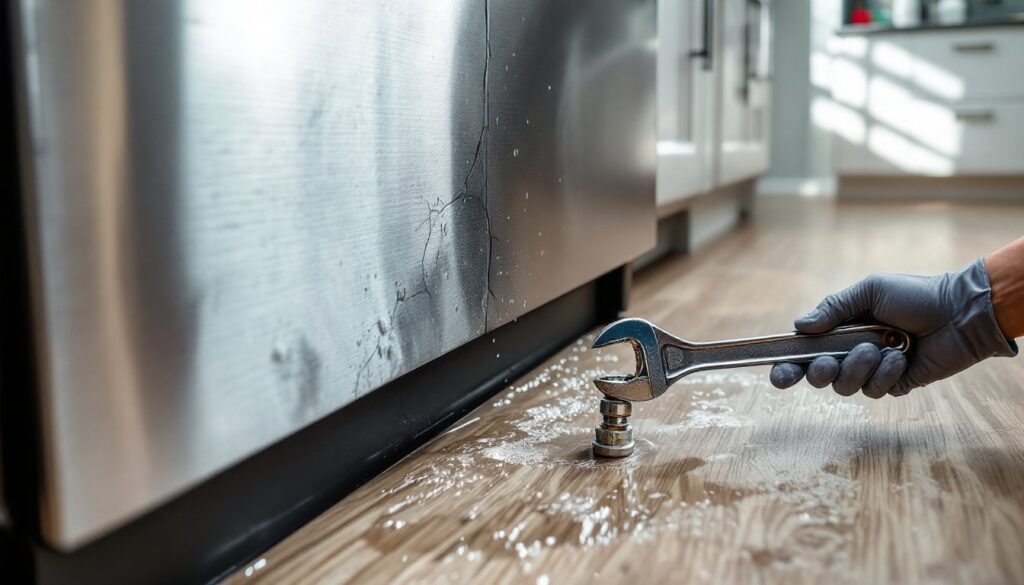
Examine the inlet and drain hoses where they connect. Feel for dampness at the compression nuts on the inlet valve (usually on the lower left front) and at the drain hose clamp near the pump. A wet connection is a red flag. Tighten connections by hand first, then use an adjustable wrench if needed, don’t overtighten and crack plastic fittings.
Test the door latch and hinges. Close the door and press on each corner. If one side feels loose or the door doesn’t sit flush, the latch or hinge may need adjustment or replacement. A misaligned door won’t seal properly no matter how good the gasket is.
If no obvious source appears, run a short cycle with the lower rack removed. Watch the spray arm rotation and listen for unusual sounds. A wobbling or cracked arm can misdirect water. If water pools in the base pan after the cycle, the pump seal or float switch is suspect.
Fixing a Leaking Door Seal or Gasket
Replacing a door gasket is one of the most straightforward dishwasher repairs. Most gaskets are held in place by friction in a channel, though some models use retaining clips or screws.
Materials and tools:
- Replacement gasket (verify model number, gaskets are not universal)
- Flathead screwdriver or putty knife
- Mild detergent and clean rag
- Warm water bucket
Steps:
-
Remove the old gasket. Open the door fully. Starting at a corner, peel the gasket out of its channel. If it’s stuck, gently pry with a flathead screwdriver. Some models have a retaining strip that must be removed first, consult the service manual if resistance is high.
-
Clean the channel. Wipe out detergent residue, mold, and mineral deposits with a rag dampened in warm soapy water. Dry thoroughly. A dirty channel prevents the new gasket from seating properly.
-
Soften the new gasket. Soak it in warm water for a few minutes to make it pliable. This step is critical in cold weather or if the gasket has been stored in a garage.
-
Install the new gasket. Begin at the top center of the door. Press the gasket lip into the channel, working your way around both sides toward the bottom corners. Keep tension even to avoid bunching. If your model uses clips, snap them in after the gasket is seated.
-
Test the seal. Close the door and run a short rinse cycle. Watch for leaks at the corners. If water escapes, the gasket may be twisted or the door latch needs adjustment.
Pro tip: Before buying a new gasket, try cleaning the existing one with white vinegar and a soft brush. Sometimes buildup is the only problem, and a thorough cleaning restores the seal.
Repairing Faulty Hoses and Water Line Connections
Hose leaks are often quick fixes, but they require shutting off water and power. Turn off the dishwasher circuit breaker and close the water supply valve (usually under the sink or in the basement near the dishwasher stub-out).
Inlet hose repair:
The inlet hose connects household water to the dishwasher’s fill valve. It’s typically ⅜-inch or ½-inch diameter braided stainless steel or reinforced rubber.
-
Inspect the compression nut where the hose meets the inlet valve. If damp, tighten it a quarter-turn with an adjustable wrench. Don’t force, brass fittings crack easily.
-
Check the hose itself for bulges, cracks, or kinks. If damaged, replace it. Unthread the compression nut at both ends (valve and supply stub), pull the old hose, and install a new one. Hand-tighten, then snug with a wrench.
-
Verify the inlet valve screen isn’t clogged. Unscrew the hose and look inside the valve port for a small mesh screen. Rinse it under water if debris is visible. A clogged screen reduces flow and can cause backpressure leaks.
Drain hose repair:
The drain hose carries waste water to the disposal or drain line. It’s usually ⅝-inch to ¾-inch corrugated or smooth-bore rubber, secured with hose clamps.
-
Tighten or replace hose clamps at the pump outlet and the disposal/drain connection. Use a flathead or nut driver to snug the screw clamp. If the clamp is rusted, replace it with a stainless worm-drive clamp.
-
Check for kinks or sags. The drain hose should loop upward (forming a high loop or air gap per plumbing codes) before descending to the drain. A sagging hose can cause backflow and leaks at the connection.
-
Test for blockages. Disconnect the hose at the disposal end and blow through it (or use a wet/dry vac). A partial clog can cause water to back up and leak from the pump.
Many homeowners find that dishwasher hose failures are caused by overtightened clamps that crack the hose collar over time, snug is better than gorilla-tight.
When to Call a Professional for Dishwasher Repairs
Not every leak is a DIY fix. Certain repairs require specialized tools, replacement parts that aren’t stocked locally, or knowledge of electrical and plumbing codes.
Call a pro if:
-
The leak originates from the pump housing or motor seal. Replacing a circulation pump or drain pump involves disassembling the lower spray arm, filter assembly, and sometimes the entire tub bottom. Pump seals are not sold separately for many models, meaning a full pump replacement (often $150–$300 in parts alone).
-
The tub itself is cracked. Plastic or stainless tubs can crack from impact or age. Tub replacement is rarely cost-effective, most techs recommend replacing the entire unit.
-
Electrical components are involved. If the float switch, control board, or inlet valve solenoid is faulty, you’re dealing with 120V wiring. Miswiring can trip breakers, damage the unit, or create shock hazards. Licensed appliance techs carry the right testers and know NEC requirements.
-
The unit is still under warranty. DIY repairs can void manufacturer or extended warranties. Check the paperwork before breaking seals or removing panels.
-
You’re uncomfortable pulling the dishwasher out. Many built-ins are secured with brackets to the underside of the countertop and connected via hardwired electrical or a plug behind the unit. If you’re not confident working in tight spaces or dealing with water shutoffs, a service call (typically $100–$200 for diagnosis) beats a flooded kitchen.
Safety note: Always disconnect power before opening access panels or removing hoses. Dishwashers share junction boxes with garbage disposals in some installations, so double-check that the correct breaker is off.
Preventing Future Dishwasher Leaks
A few routine maintenance habits keep gaskets, hoses, and seals in good shape and catch small issues before they become big leaks.
Clean the door gasket monthly. Wipe it down with a damp cloth and mild detergent. Remove food particles, grease, and detergent buildup that can harden and crack the rubber. For stubborn mold, use a 50/50 white vinegar and water solution.
Inspect hoses and connections twice a year. Look for cracks, bulges, or corrosion at clamps and fittings. Tighten any loose connections. Replace hoses every 5–7 years as preventive maintenance, even if they look fine, rubber degrades from the inside out.
Don’t overload the dishwasher. Overloading can block spray arms, causing uneven water distribution and excessive pressure against the door seal. Load dishes per the manual’s recommendations.
Use the right detergent. Excessive suds from hand-dishwashing liquid or non-HE detergent can overflow the tub and force water past the door seal. Stick to dishwasher-specific detergent, pods, powder, or liquid labeled for automatic dishwashers.
Run hot water before starting a cycle. Cold inlet water can cause seals to contract slightly, creating temporary gaps. Running the kitchen faucet until water is hot ensures the dishwasher fills with warm water from the start, keeping seals pliable.
Check the float mechanism quarterly. Lift the plastic float (usually in the front bottom of the tub) and let it drop. It should move freely. If it sticks, clean around the base with a toothbrush and rinse.
Experts at This Old House recommend an annual deep clean of the filter, spray arms, and interior to prevent clogs that can lead to pressure-related leaks.
Conclusion
Most dishwasher leaks are fixable with basic tools, a little patience, and attention to detail. Door gaskets, hose clamps, and connections are the usual suspects, and catching them early prevents costly water damage. When in doubt, measure twice, tighten once, and don’t skip the prep work, clean channels and proper part fitment make all the difference. For pump or tub issues, calling a licensed tech is the smart play. Keep up with simple maintenance, and that machine will run leak-free for years.