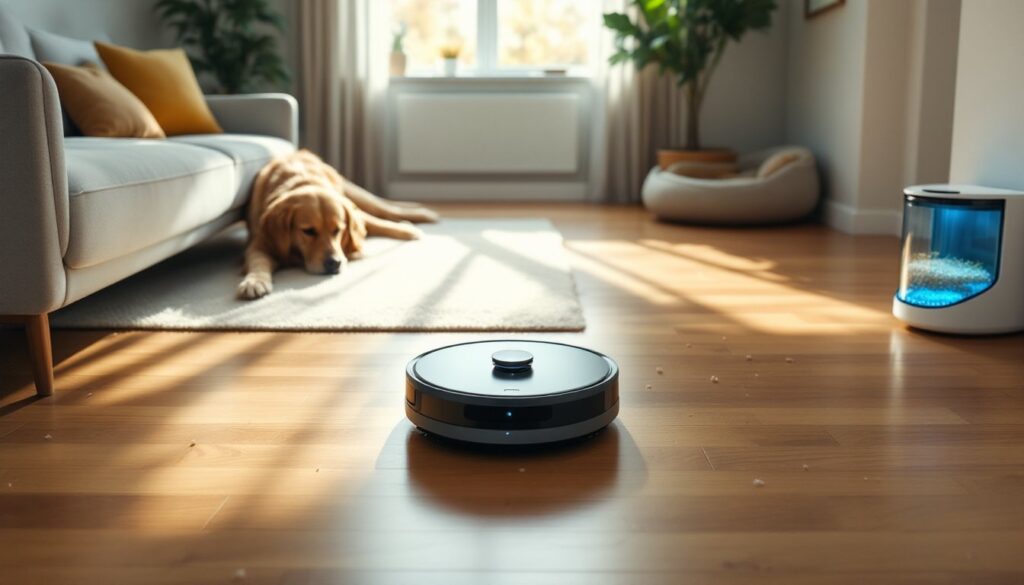
Robot vacuums have come a long way since they first bumped their way around living rooms like lost hockey pucks. Today’s models map rooms with laser precision, avoid stairs like they’ve got common sense, and some even empty their own dustbins. If sweeping and vacuuming rank somewhere between “chore I tolerate” and “why did I buy so much area rug,” a robot vacuum can handle daily maintenance while homeowners focus on projects that actually need two hands and a level. This guide breaks down the best robot vacuums for 2025 based on performance, price, and real-world use cases, no fluff, just what works.
Table of Contents
ToggleKey Takeaways
- The best robot vacuum 2025 options range from budget-friendly models under $300 to premium self-emptying systems, matching different home sizes and cleaning needs.
- Strong suction (2,500+ Pa), LiDAR navigation, and self-emptying bases are critical features that separate effective robot vacuums from entry-level models that struggle with obstacles and coverage.
- Pet owners benefit most from dual-roller brush designs and allergen-trapping filtration, which reduce hair tangling and capture 99% of dander compared to standard single-brush vacuums.
- Multi-floor homes exceeding 2,000 square feet require models with recharge-and-resume capability and up to 210-minute runtimes to avoid incomplete cleaning cycles.
- Robot vacuums excel at maintaining finished spaces during home renovations by handling daily dust and pet hair, but should stay away from construction zones with loose hardware and drywall debris.
What to Look for When Choosing a Robot Vacuum
Not all robot vacuums are created equal, and the cheapest model on sale won’t necessarily save money if it quits after six months or can’t handle a threshold. Here’s what matters when evaluating options.
Suction power is measured in Pascals (Pa). Entry-level models start around 1,500 Pa, which handles hardwood and low-pile carpet. For homes with pets, area rugs, or medium-pile carpet, look for 2,500 Pa or higher. Some flagship units push past 4,000 Pa, though that’s overkill unless dealing with embedded dirt or construction dust.
Navigation technology separates the budget tier from the premium. Basic models use infrared or bump sensors, they’ll eventually cover a room, but they’re inefficient and prone to missing spots. Mid-range and high-end units use LiDAR (laser-based mapping) or camera-based SLAM (simultaneous localization and mapping), which create floor plans, avoid obstacles, and clean in methodical rows instead of drunken spirals.
Battery life and charging behavior matter more in larger homes. A 90-minute runtime works fine for apartments or single-story layouts under 1,200 square feet. For multi-level homes or open floor plans exceeding 2,000 square feet, look for models that auto-resume cleaning after recharging. Some units park themselves on the dock, top off the battery, then pick up exactly where they left off.
Dustbin capacity and self-emptying bases reduce hands-on maintenance. Standard onboard bins hold 0.4 to 0.6 liters, fine for daily touch-ups in smaller spaces. Self-emptying models transfer debris into a base station with a 2- to 3-liter bag or bin, cutting manual emptying to once every few weeks. Worth it if dealing with shedding pets or high-traffic areas.
Height and obstacle clearance are practical concerns. Most robot vacuums are 3 to 4 inches tall. Measure furniture clearance before buying, units that can’t fit under a couch or bed leave dead zones that defeat the purpose. Climbing ability varies too: budget models struggle with thresholds over 0.5 inches, while better units clear up to 0.8 inches or handle transitions between hardwood and thick rugs.
Best Overall Robot Vacuum for 2025
The Roborock S8 Pro Ultra leads the pack for homeowners who want a single device that handles vacuuming, mopping, and its own maintenance without constant babysitting. It combines strong suction (6,000 Pa), precise LiDAR navigation, and a dock that washes mop pads, refills water, and empties debris.
Navigation is where this unit shines. The laser mapping builds accurate floor plans within one cleaning cycle, and the companion app lets users set no-go zones, room-specific schedules, and suction levels. It transitions smoothly between hardwood, tile, and medium-pile carpet without getting stuck or dragging mop pads where they don’t belong.
The dual-roller brush system is less prone to hair tangles than single-brush designs, a real advantage for homes with long-haired occupants or shedding pets. The mopping function uses sonic vibration to scrub stuck-on grime, not just drag a damp cloth around. Testing by cleaning and tech experts confirms strong performance across surface types.
Downside: it’s expensive, typically retailing around $1,400 to $1,600. The dock also takes up about 16 inches of wall space, so it’s not ideal for cramped laundry rooms or tight corners. But for whole-home automation and minimal intervention, it delivers.
Best Budget-Friendly Robot Vacuum
The Eufy RoboVac 11S Max proves that effective robot vacuums don’t require a four-figure investment. Priced around $230 to $280, it focuses on the basics, reliable suction, slim profile, and quiet operation, without the app connectivity or smart mapping found in premium models.
At 2,000 Pa suction and just 2.85 inches tall, it fits under most furniture and handles daily maintenance on hardwood, tile, and low-pile carpet. It won’t deep-clean shag rugs or pull ground-in dirt from entryway mats, but for routine dust and crumb pickup, it’s more than adequate.
Navigation relies on infrared sensors and a semi-random cleaning pattern. It’s not as efficient as LiDAR models, expect longer runtimes to cover the same area, but it gets the job done in apartments or single-level homes under 1,000 square feet. Runtime is about 100 minutes on a charge, and it auto-docks when the battery runs low.
There’s no app, no voice control, and no scheduling beyond a basic infrared remote. Users who want room-specific cleaning or virtual boundaries will find it limiting. But for homeowners who just want to press a button and let it run while they’re out, the simplicity is a feature, not a bug.
Note that the dustbin is on the small side (0.6 liters), so homes with heavy shedding or high foot traffic will need to empty it every other day. Still, it’s one of the most reliable entry-level options and frequently earns praise from consumer testers.
Best Robot Vacuum for Pet Hair and Allergens
Pet hair and dander put extra demands on a robot vacuum, it needs strong suction, tangle-resistant brushes, and filtration that actually traps allergens instead of recirculating them. The iRobot Roomba j7+ handles all three, plus adds obstacle avoidance smart enough to dodge pet accidents and charging cables.
The 3-stage cleaning system combines edge brushes, dual rubber rollers, and 2,100 Pa suction. Rubber rollers are key here, they flex to stay in contact with uneven surfaces and resist hair wrapping better than bristle brushes. Most users find they only need to cut away tangled hair every few weeks instead of after every run.
PrecisionVision navigation uses a front-facing camera and machine learning to identify and avoid obstacles in real time. It recognizes shoes, cords, and yes, pet waste, then sends a photo alert through the app. That’s a worthwhile feature for anyone who’s dealt with a vacuum smearing a “surprise” across the floor.
The self-emptying Clean Base holds up to 60 days of debris in an AllergenLock bag, which is designed to trap 99% of pollen and dander when sealed. Homeowners with allergies or asthma will appreciate not having to handle dustbin contents weekly.
Compatibility with the Braava jet m6 mop (sold separately) adds another layer of cleaning for homes that need both vacuuming and mopping on a schedule. The two units coordinate through the iRobot app, vacuum first, then mop, without overlap or missed spots.
Cost runs around $800 to $900 depending on promotions. It’s mid-tier pricing for a unit that handles pet hair and allergen control better than most competitors.
Best Robot Vacuum for Large Homes and Multi-Floor Cleaning
Large homes and multi-story layouts demand longer battery life, the ability to store multiple floor maps, and enough smarts to resume cleaning without starting over from scratch. The Ecovacs Deebot X2 Omni checks those boxes and adds a unique square-ish design that improves edge and corner cleaning.
With 8,000 Pa suction, it’s one of the most powerful units available in 2025, overkill for light dust, but effective for homes with kids, pets, or high-traffic zones that accumulate grit. Runtime tops out around 210 minutes on the lowest power setting, and it supports recharge-and-resume for homes over 3,000 square feet.
Multi-floor mapping stores up to four separate floor plans. Users can label rooms, assign cleaning schedules, and adjust suction or mopping intensity per zone. For example, set it to high suction in the mudroom, standard in the living room, and mop-only in the kitchen, all in one automated run.
The all-in-one dock washes and dries mop pads with hot air (reducing mildew smell), refills clean water, empties dirty water, and handles dustbin debris. It’s one of the most hands-off systems available, though the dock itself is bulky, about 17 inches wide and 20 inches deep.
Compared to models tested across dozens of homes, the X2 Omni consistently ranks high for coverage and low for maintenance frequency. Expect to pay around $1,500 to $1,700, which is steep but justified for whole-home automation across multiple levels.
How Robot Vacuums Fit into Your DIY Home Maintenance Routine
Robot vacuums won’t replace a shop vac after drywall sanding or handle sawdust cleanup in a workshop, but they’re excellent for maintaining finished spaces between projects. Homeowners juggling renovations and everyday mess benefit from setting a vacuum to run daily in rooms that aren’t torn apart, keeping dust migration under control.
For homes undergoing phased remodeling, say, finishing a basement while living upstairs, a robot vacuum with virtual boundaries or no-go zones keeps it out of construction areas while maintaining the rest of the house. That’s especially useful when dealing with drywall dust, which settles everywhere and requires near-constant sweeping.
Hardwood and tile maintenance improves with daily robotic passes. Fine grit acts like sandpaper on polyurethane or wax finishes, so regular removal extends the life of flooring between refinishing cycles. Same logic applies to engineered wood or luxury vinyl plank, less abrasive dirt means fewer micro-scratches and longer wear.
Pet owners doing home improvement work appreciate the consistent hair removal. Sanding, painting, or installing trim already generates cleanup: add shedding season to the mix, and it’s easy to fall behind. A scheduled robot vacuum keeps baseline cleanliness in check so weekend projects don’t start with 30 minutes of sweeping.
One caution: keep robot vacuums away from loose hardware, small trim offcuts, or drywall screws left on the floor. They’ll either jam the machine or get flung across the room. Set a staging area for tools and materials, and run the vacuum only in cleared zones.
Conclusion
Robot vacuums in 2025 range from basic bump-and-clean units to fully automated systems that mop, self-empty, and map multiple floors. Budget-conscious buyers will find reliable options under $300, while homeowners managing pets, allergies, or large square footage can justify spending more for smarter navigation and hands-off maintenance. Match the unit to the home’s layout, flooring mix, and tolerance for hands-on upkeep, there’s no one-size-fits-all, but there’s likely a model that fits the job.