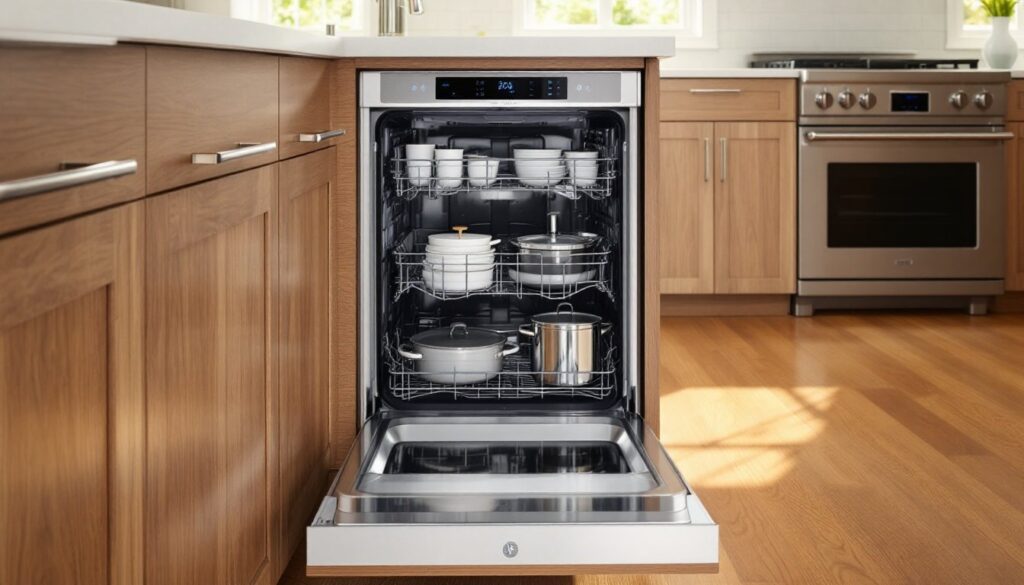
When you’re deep into a kitchen remodel, the dishwasher isn’t just another box to check off. It’s a workhorse that’ll run 300-plus cycles a year, and choosing the wrong one means dealing with rewash cycles and noise complaints for the next decade. GE Monogram dishwashers sit at the top of GE’s appliance lineup, positioned as premium machines built for serious kitchens, but they come with a price tag that makes most homeowners pause. Before you commit to this investment, you need to know what separates a Monogram from the standard models at big-box stores, whether the features justify the cost, and what kind of installation and upkeep you’re signing up for.
Table of Contents
ToggleKey Takeaways
- GE Monogram dishwashers stand out with heavier-gauge stainless steel construction, multiple wash arms, and typically quieter operation (38-42 decibels) compared to standard models.
- The GE Monogram dishwasher’s panel-ready design and engineered hinges support custom cabinetry panels up to 3/4-inch thick, making them ideal for high-end kitchen remodels.
- Unique features like Bottle Wash Jets and a full-depth third rack with adjustable tines address specific household cleaning challenges that budget dishwashers can’t handle.
- Installation requires careful attention to 24-25 inches of cabinet depth, dedicated 120V circuits, and proper drain-line configuration—hiring professionals for panel-ready setup adds $150-$250 but prevents misalignment issues.
- Monthly filter cleaning, quarterly spray arm inspection, and consistent rinse aid refills are essential maintenance steps that directly impact GE Monogram dishwasher performance and drying results.
- At $2,200-$3,400, GE Monogram dishwashers represent a significant investment best suited for homeowners staying 10+ years and prioritizing quiet operation and custom integration over budget constraints.
What Makes GE Monogram Dishwashers Stand Out from Standard Models
GE Monogram dishwashers differentiate themselves through build quality and engineering that goes beyond what you’ll find in standard GE or even mid-tier GE Profile models. The cabinet construction uses heavier-gauge stainless steel throughout, not just the tub, but the door panel and structural components. This reduces vibration and contributes to quieter operation, typically rated around 38-42 decibels, which is quieter than most conversations.
The wash system itself relies on a tri-blade wash arm configuration with dedicated jets that target specific zones. Where budget dishwashers use a single rotating arm, Monogram units employ multiple arms with variable spray patterns, ensuring water reaches every angle of heavily soiled cookware. The filtration system is a four-stage setup with a self-cleaning fine mesh filter that reduces manual maintenance.
Panel-ready design is standard, not optional. These units ship with a trim kit that accepts custom cabinetry panels, allowing them to disappear into high-end kitchen designs. The door weight and hinge mechanism are engineered to support solid wood panels up to 3/4-inch thick, which matters when you’re matching walnut or quartersawn oak cabinetry. Cheaper dishwashers claiming panel-ready compatibility often can’t handle the weight without hinge sag over time.
Control interfaces are designed for integration. You’ll find hidden top-mounted controls and minimal external branding, which preserves clean sightlines in contemporary or transitional kitchens. Some models offer Wi-Fi connectivity through the SmartHQ app, letting you start cycles remotely or get alerts when the rinse aid runs low, useful if you’re managing a second home or rental property.
Key Features and Performance Capabilities
Monogram units come with 16 place-setting capacity in most models, which translates to real-world use for a family of four running the dishwasher every other day, or daily use for larger households. The third rack isn’t a shallow utensil tray, it’s a full-depth rack with adjustable tines that handle espresso cups, ramekins, and even small bowls, freeing up the lower racks for platters and stockpots.
The Bottle Wash Jets feature is worth calling out. Dedicated high-pressure jets mounted in the back of the lower rack are designed to flush out narrow-neck bottles, travel mugs, and vases. If you’ve ever hand-washed a dozen baby bottles or tried scrubbing dried smoothie residue from a Hydro Flask, this feature alone might justify the upgrade.
Heat drying uses a condensation system with a heated rinse rather than an exposed heating element. This approach is gentler on plastics and doesn’t leave that burnt smell some dishwashers produce. Drying performance, particularly on plastics, can still be hit-or-miss unless you crack the door after the cycle, common across most dishwashers, not just Monogram.
Cycle options include:
- Heavy wash for baked-on casserole dishes and cast iron (yes, you can wash cast iron if it’s well-seasoned, though purists will argue otherwise)
- China/crystal mode with reduced water pressure
- Speed wash that completes in under an hour, though it won’t handle heavily soiled loads
- Sanitize cycle certified to NSF/ANSI Standard 184, reaching temperatures that eliminate 99.9% of bacteria, useful if you’re washing cutting boards that handled raw poultry
Water usage averages 2.9-3.5 gallons per cycle, which earns an Energy Star rating and keeps utility costs reasonable. For perspective, hand-washing the same load typically uses 15-20 gallons.
Installation Considerations for Your Kitchen Renovation
Before you order, verify your rough-in dimensions. Monogram dishwashers require a 24-inch-wide cabinet opening, which is standard, but the depth is where things get tricky. These units need 24-25 inches of depth from the front of the cabinet to the back wall, not including the door thickness. If you’re working with shallow base cabinets or an older home with non-standard framing, measure twice.
Electrical requirements call for a dedicated 120V, 15-amp circuit. This should be a GFCI-protected outlet located in the adjacent cabinet, not behind the unit. If your kitchen was built before 2000, you might be working with shared circuits, upgrade this before installation to meet current NEC (National Electrical Code) standards and avoid nuisance tripping. Hire a licensed electrician if you’re not confident pulling a new home run from the panel.
Plumbing hookup uses a standard 3/8-inch compression fitting for the water supply, but you’ll need a high-loop or air gap for the drain line, depending on local code. Some jurisdictions require an air gap (that little chrome dome on the sink or countertop), while others accept a high-loop configuration where the drain hose arches up and secures to the underside of the countertop. Check with your local building department before roughing in the plumbing.
Panel-ready installation adds complexity. You’ll need to attach your custom panel using the provided mounting brackets, and the weight must be distributed evenly to prevent door misalignment. Work with your cabinetmaker to ensure the panel dimensions match the manufacturer’s template exactly, even 1/8 inch off can create uneven gaps. The door springs are adjustable, but they require fine-tuning after the panel is installed. If you’re not comfortable with this, factor in $150-$250 for professional installation, which most appliance dealers include.
One often-overlooked detail: soundproofing. Monogram dishwashers are quiet, but installation matters. Use the provided sound-dampening side panels and ensure the unit is level front-to-back and side-to-side. A dishwasher that’s even slightly tilted will be louder and may not drain completely.
Maintenance Tips to Keep Your Monogram Dishwasher Running Smoothly
Monthly maintenance starts with the filter assembly. Even though Monogram uses a self-cleaning system, you should pull the lower filter every 4-6 weeks and rinse it under hot water. Food particles, especially fibrous vegetables and sticky starches, can accumulate and reduce spray arm effectiveness. The filter twists out counterclockwise, no tools required.
Inspect the spray arms quarterly. Small spray holes can clog with mineral deposits, particularly if you have hard water (above 7 grains per gallon). Remove the arms by lifting them off the mounting hub and use a toothpick or straightened paperclip to clear blocked jets. Don’t use metal tools that might enlarge the holes.
Rinse aid isn’t optional, it’s essential for drying performance. Monogram dishwashers have a rinse aid dispenser that should be refilled when the indicator light comes on, roughly every 30-40 cycles. If you’re getting water spots on glassware, it’s usually a rinse aid issue, not a machine defect. Use a quality rinse aid, not the bargain-brand stuff that leaves a film.
For hard water areas, run a dishwasher cleaner through an empty cycle every 2-3 months. Products like Affresh or Finish cleaner dissolve mineral buildup and grease films that accumulate in the pump and spray arms. This is especially critical if you skip the rinse aid or run the dishwasher infrequently.
Door gasket care prevents leaks. Wipe down the rubber seal around the door opening monthly with a damp cloth. Food debris and grease can prevent a tight seal, leading to minor leaks that damage your flooring over time. If the gasket feels stiff or shows cracks, it’s a $30-$50 part that you can replace yourself with basic hand tools.
Don’t ignore the SmartDispense system if your model has it. This holds up to 45 ounces of detergent and auto-doses each cycle. Refill it with liquid detergent only, never powder or pods, which will clog the system. Clean the dispenser reservoir every six months by running warm water through it.
Common Issues and Troubleshooting Solutions
Dishes not getting clean is the top complaint, and it’s usually user error, not machine failure. Overloading blocks water spray, leave gaps between dishes and don’t nest bowls. Pre-scrape (but don’t pre-rinse) heavily soiled items. The sensors need some soil to trigger the right cycle intensity: if dishes are too clean going in, the machine may run a lighter wash than needed.
White film or cloudy glassware points to hard water or too much detergent. If you have soft water (below 3 grains per gallon), cut your detergent dose in half. If you have hard water, consider a whole-house water softener, it’ll benefit all your appliances, not just the dishwasher. Temporary fix: run a cup of white vinegar through a hot cycle to clear mineral deposits.
Door won’t latch often results from a misaligned strike plate or a panel that’s too heavy. Check that the door closes evenly and the latch engages smoothly. If the panel is custom wood, it might have absorbed moisture and swelled. Let it acclimate, or plane down the edges slightly. Don’t force it, you’ll crack the door liner.
Error codes on Monogram models usually display as flashing lights or alphanumeric codes on the control panel. The most common:
- C1 or leak detected: Check the drain hose connection and the door gasket. If the unit has a leak sensor in the base pan, it might have triggered from a minor spill during installation.
- F1 or water fill issue: Ensure the water supply valve is fully open. The inlet screen on the fill valve may be clogged, it’s a small mesh filter where the water line connects to the dishwasher.
- F7 or heating element failure: This requires a service call unless you’re comfortable working with electrical components.
If you’re handy, tech coverage from CNET often includes appliance troubleshooting walkthroughs that apply to high-end models. For persistent issues, GE Monogram’s service network is more reliable than third-party repair shops, though you’ll pay a premium for factory-authorized technicians.
Pricing and Where to Buy
As of 2026, GE Monogram dishwashers range from $2,200 to $3,400, depending on the model and finish. That’s roughly double what you’d pay for a solid mid-range dishwasher and 3-4 times the cost of a basic unit. Custom panel-ready models sit at the top of the range, while stainless-front versions cost slightly less.
Pricing fluctuates based on promotions and package deals. If you’re buying multiple Monogram appliances (range, refrigerator, dishwasher), many dealers offer 10-15% package discounts. Don’t pay MSRP, negotiate, especially if you’re working directly with an appliance showroom.
Where to buy matters. Authorized Monogram dealers provide white-glove delivery and professional installation, which is worth the extra cost if you’re installing a panel-ready model. Big-box stores like Home Depot or Lowe’s carry limited Monogram inventory but rarely stock panel-ready units. Online retailers like AJMadison or AppliancesConnection often have better selection and competitive pricing, though shipping and installation are usually separate fees.
Extended warranties run $200-$400 for 3-5 years of coverage beyond the standard one-year parts and labor warranty. Whether it’s worth it depends on your comfort with DIY repairs. Major component failures (control board, pump motor) can cost $400-$600 in parts alone, so the math pencils out if you’re risk-averse.
Financing through retailers or manufacturer programs can spread the cost over 12-24 months, often with 0% APR if you qualify. If you’re renovating an entire kitchen, rolling the dishwasher into a home equity line of credit might offer better terms.
Compare your options by checking product reviews from Good Housekeeping, which runs standardized testing on dishwashers and ranks performance across categories. Independent testing helps validate whether the premium price delivers measurable performance gains.
Conclusion
A monogram dishwasher delivers on build quality, capacity, and quiet operation, but it’s not a magic bullet. If you’re renovating a high-end kitchen, installing custom cabinetry, and planning to stay in the home for 10+ years, the investment makes sense. The panel-ready integration and performance features hold up better than mid-tier models, and the GE service network provides reliable support. But if you’re flipping a property, working with a tight budget, or simply need a reliable dishwasher without the luxury markup, there are excellent mid-range options that deliver 85% of the performance at half the cost. Measure your cabinet opening, confirm your electrical and plumbing rough-in, and decide whether the features align with how you actually use your kitchen, not just how the showroom looks.