
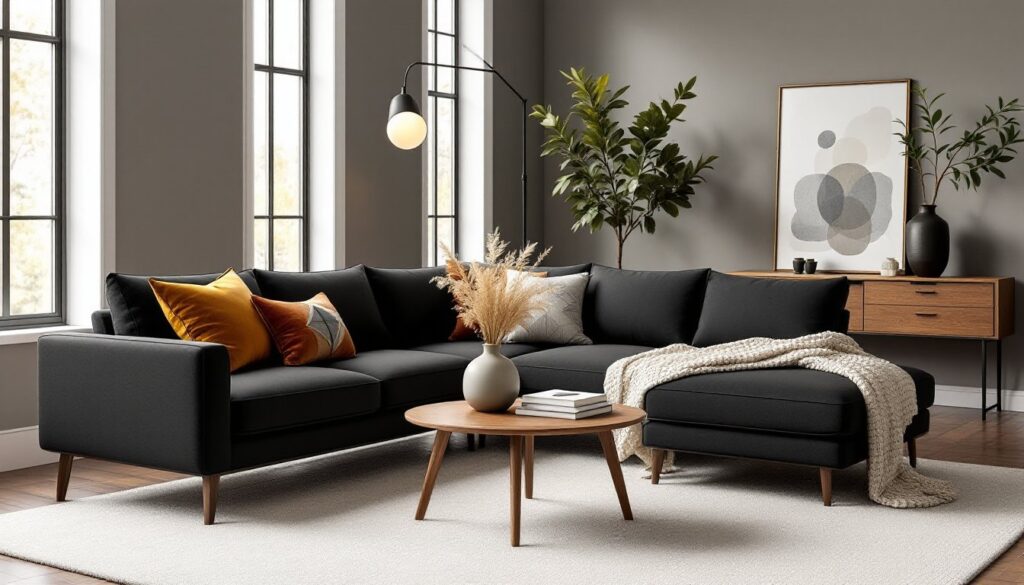
A black sectional sofa anchors a living space like few other pieces can. It’s versatile, hides wear better than lighter fabrics, and pairs with nearly any color palette, from industrial grays to warm earth tones. Whether you’re furnishing a finished basement, an open-concept great room, or a compact apartment, a well-chosen sectional solves seating, defines zones, and handles daily use without demanding constant attention. This guide walks through what to look for when buying, how to style it without creating a visual black hole, and practical steps to keep it looking sharp for years.
Table of Contents
ToggleKey Takeaways
- A black sectional sofa provides durability and practicality for high-traffic homes while acting as a neutral backdrop that makes rooms feel larger and lets accent decor shine.
- When buying a black sectional, prioritize hardwood frames with screwed-and-glued joinery, high-density foam cushions (1.8 lb/ft³ or higher), and sinuous or eight-way hand-tied spring support for lasting comfort.
- Measure doorways and room dimensions carefully, allowing at least 18 inches of clearance behind the sofa and 30–36 inches in front, since many sectionals ship in modules that may not fit tight corners.
- Performance fabrics with stain-resistant treatments offer the easiest maintenance for families and pets, while leather ages gracefully and requires conditioning every 6–12 months to prevent cracking.
- Style a black sectional with light walls and bold accent pillows in minimalist spaces, warm wood tones and patterned rugs in traditional rooms, or mixed textures and bohemian patterns to prevent visual heaviness.
- Budget-friendly upgrades like slipcovers ($100–$300), high-density foam cushion replacements ($50–$150), and furniture legs transform a worn black sectional without the cost of replacement.
Why a Black Sectional Sofa Is the Perfect Choice for Modern Homes
Black upholstery doesn’t show dirt, pet hair, or scuffs the way beige or cream does. That alone makes it a practical option for households with kids, dogs, or high foot traffic. But beyond durability, black acts as a neutral backdrop that lets accent pillows, throws, and artwork take center stage.
In modern and transitional interiors, a sectional sofa black in finish grounds the room without competing with architectural details like exposed beams, metal railings, or large windows. It works equally well in minimalist spaces, where clean lines and monochrome palettes dominate, and in eclectic rooms that mix textures and colors.
Sectionals also solve layout challenges. An L-shaped or U-shaped configuration can divide an open floor plan, create a conversation zone, or maximize seating in a corner that would otherwise go unused. When upholstered in black, the piece recedes visually, making the room feel larger than a bulky, light-colored sofa would.
Key Features to Look for When Buying a Black Sectional
Start with the frame. Hardwood frames, oak, maple, or birch, outlast particleboard or softwood alternatives. Check corner blocks and joinery: screwed and glued joints hold up better than staples alone. If the manufacturer lists the frame material as “engineered wood,” ask for specifics. Some engineered woods are dense and stable: others sag within a year.
Cushion fill matters as much as the frame. High-density foam (1.8 lb/ft³ or higher) resists compression and maintains shape. Down-wrapped foam cores offer a softer sit but require regular fluffing. Avoid all-polyester fill in the seat cushions, it flattens fast. Look for sinuous (S-spring) or eight-way hand-tied coil suspension in the seat deck for long-term support.
Measure doorways, stairwells, and hallways before you buy. Many sectionals ship in modules, but some have attached chaise units that won’t bend around tight corners. Confirm the overall footprint fits your room with at least 18 inches of clearance behind the sofa for walkways and 30–36 inches in front for a coffee table.
Fabric vs. Leather: Choosing the Right Material
Fabric options include performance weaves (polyester blends treated for stain resistance), cotton, linen, and velvet. Performance fabrics, branded as Crypton, Sunbrella, or similar, repel spills and clean easily with water and mild soap. They’re ideal for families and pet owners. Natural fibers like cotton and linen breathe well and feel softer but stain more readily and may require professional cleaning.
Leather, top-grain or full-grain, ages gracefully, developing a patina over time. It’s cooler in summer, warmer in winter, and wipes clean with a damp cloth. Bonded leather (leather scraps glued to a fabric backing) peels and cracks within a few years: avoid it. If leather stretches the budget, consider a leather-match design: genuine leather on high-contact areas (seats, arms) and vinyl on the back and sides.
Velvet and microfiber sit between fabric and leather in terms of maintenance. Velvet adds texture and a slight sheen but shows crushing and requires regular brushing to maintain the nap. Microfiber resists stains and feels soft, though it can pill with heavy use.
How to Style a Black Sectional Sofa in Different Room Designs
A black sectional can disappear into a dark room if you’re not intentional with contrast and layering. Balance is key.
In a minimalist space, pair the sectional with light walls (white, soft gray, or pale taupe) and a light-colored area rug, jute, ivory wool, or low-pile gray. Add one or two accent pillows in a single bold color (mustard, rust, or forest green) and a floor lamp with a slender profile. Keep surfaces clear: let the sectional’s shape be the focal point.
For industrial or loft-style rooms, work with exposed brick or concrete walls and metal accents, think steel-framed coffee tables, black iron shelving, or Edison-bulb pendants. Layer textures: a chunky knit throw, leather or faux-leather pillows, and a cowhide or distressed rug. The black upholstery ties into the raw materials without softening the edge.
Traditional or transitional interiors benefit from warmer tones. Use cream, beige, or camel accents in pillows and throws. Incorporate wood furniture, walnut or cherry coffee tables, side tables with turned legs, and add a patterned rug (Persian, Oriental, or geometric) to introduce color and movement. Brass or bronze hardware and lighting warm up the palette.
In eclectic or bohemian settings, mix patterns and colors freely. Layer pillows in ikat, suzani, or tribal prints. Drape a woven or fringed throw over one arm. Use a colorful vintage rug, hang wall art in varied frames, and add plants in ceramic or terracotta pots. The black sectional provides a steady anchor that prevents the room from feeling chaotic.
Placement and Layout Tips to Maximize Your Space
In open-concept layouts, float the sectional to divide the living area from the dining or kitchen zone. Position the back of the sofa as a visual boundary, then add a console table behind it for lamps, books, or decor. This creates two distinct spaces without building walls.
Corner placement works well in smaller rooms or basements. Tuck the sectional into an L-shaped corner, leaving the center of the room open for a coffee table and traffic flow. This maximizes seating capacity without crowding walkways.
Avoid pushing the sectional flush against walls if the room allows. Leave 6–12 inches of clearance behind and to the sides. This breathing room makes the piece feel intentional rather than shoved into place and improves acoustics by reducing sound bounce off hard surfaces.
If the sectional includes a chaise, orient it toward a focal point, fireplace, TV, or large window. The chaise becomes a natural lounging spot for reading or napping, and the arrangement guides the eye through the room.
Consider traffic patterns. Don’t block doorways or create narrow bottlenecks. A good rule: maintain at least 30 inches of clearance for primary walkways and 18–24 inches for secondary paths. If the room feels tight, swap a full U-shaped sectional for an L-shape or a smaller modular configuration.
Maintenance and Care: Keeping Your Black Sectional Looking New
Vacuum weekly using an upholstery attachment to pull out dust, crumbs, and pet hair before they work into the weave. Pay attention to crevices between cushions and along seams where debris accumulates.
For fabric sectionals, treat spills immediately. Blot, don’t rub, with a clean, dry cloth to absorb liquid. Use a manufacturer-approved cleaner or a mix of mild dish soap and water. Test any cleaner on an inconspicuous spot first. Avoid bleach or harsh solvents: they can discolor or weaken fibers.
Leather care requires conditioning every 6–12 months to prevent drying and cracking. Use a pH-balanced leather conditioner and apply it with a soft cloth in circular motions. Wipe away excess and buff lightly. For spills, wipe immediately with a damp cloth and dry with a towel. Avoid saddle soap or petroleum-based products, they leave residue and can darken the finish over time.
Rotate and flip cushions every few months to distribute wear evenly. If your sectional has removable covers, check care tags. Many performance fabrics are machine washable on gentle cycles with cold water: air dry or tumble on low heat to prevent shrinkage.
Keep the sectional out of direct sunlight, which can fade even black upholstery over time. Use window treatments or UV-filtering film if the piece sits near large windows.
For pet owners, trim pet nails regularly to reduce snags and scratches. Use a lint roller or rubber brush between vacuuming sessions to manage shedding.
Budget-Friendly DIY Upgrades for Your Black Sectional
If the sectional is structurally sound but the upholstery is worn, consider slipcovers. Ready-made covers (Ikea, Amazon Basics, or SureFit) run $100–$300 depending on size and fabric. Custom slipcovers cost more but fit precisely. Measure carefully: you’ll need width, depth, and arm height for each module. Stretchy knit covers are forgiving and easy to install: woven cotton or linen covers look cleaner but require more tailoring.
Replace sagging cushions with new foam inserts. Order high-density foam cut to size from an upholstery supply shop or online (FoamByMail, The Foam Factory). Wrap the foam in Dacron batting for a softer surface, then slip it back into the original cover. This DIY runs $50–$150 per cushion, far less than buying a new sectional.
Add furniture legs to elevate the profile and create storage space underneath. Many sectionals sit on low plastic feet or rest directly on the floor. Swap them for wooden or metal legs (4–6 inches tall) available at hardware stores or online. You’ll need a drill, screws, and possibly hanger bolts if the existing mounting points don’t match. This simple upgrade changes the visual weight and makes vacuuming easier.
Accent pillows and throws refresh the look without permanent changes. Mix textures, linen, velvet, faux fur, and vary sizes (18×18-inch, 20×20-inch, and lumbar). Stick to a cohesive color story: three colors max, with one dominant and two accents. Throws in chunky knits or woven patterns add warmth and can be swapped seasonally.
If the sectional fabric is intact but feels dated, try fabric dye (Rit DyeMore for synthetics, Rit All-Purpose for natural fibers). This works best on lighter starting colors: dyeing black fabric a different shade is tough. Test on a hidden section first. Results vary, but it’s a low-cost experiment if you’re considering replacement anyway.
For leather sectionals with minor scratches, use a leather repair kit (under $20) that includes filler compound and color-matched dye. Clean the area, apply filler to deeper scratches, sand smooth once dry, then dab on dye with a sponge applicator. Finish with leather conditioner. This won’t erase damage but makes it far less obvious.