Finding droppings in the pantry or hearing scratching in the walls means it’s time to act. Mice reproduce quickly, a single female can have 5-10 litters per year, so waiting only makes the problem worse. The right mouse trap, placed correctly and baited properly, can solve a small infestation without pesticides or a call to pest control. But walk into any hardware store and you’ll face a wall of options: classic wood snap traps, enclosed bait stations, electronic zappers, catch-and-release boxes. Each type works differently, and choosing the wrong one wastes time and lets the problem grow. This guide covers the core trap types, where to place them, how to bait and set them safely, and what to do once you’ve caught something.
Table of Contents
ToggleKey Takeaways
- Snap traps remain the most cost-effective and reliable mouse trap for most homeowners, costing under a dollar and killing quickly when set correctly along baseboards.
- Placement along walls and edges matters more than bait selection—mice navigate using whiskers, not vision, so position traps perpendicular to walls where droppings and grease marks indicate activity.
- Peanut butter is more effective than cheese for baiting a mouse trap because it’s sticky, aromatic, and forces the mouse to work the trigger plate.
- Electronic traps ($30-$80) offer cleaner operation and can catch multiple mice before emptying, making them worthwhile for serious infestations but overkill for single strays.
- Always wear disposable gloves when handling mouse traps and dead rodents to prevent exposure to hantavirus, leptospirosis, and other pathogens mice carry.
- If catching multiple mice daily or seeing heavy signs of infestation, combine trapping with sealing entry points and eliminating food sources, or contact a licensed pest control professional.
Understanding Different Types of Mouse Traps
Mouse traps fall into a few broad categories, each with trade-offs in cost, effectiveness, and ease of use. Knowing how each type works helps match the trap to your situation, whether you’re dealing with a single mouse in the kitchen or signs of activity throughout the basement.
Snap Traps: The Traditional Choice
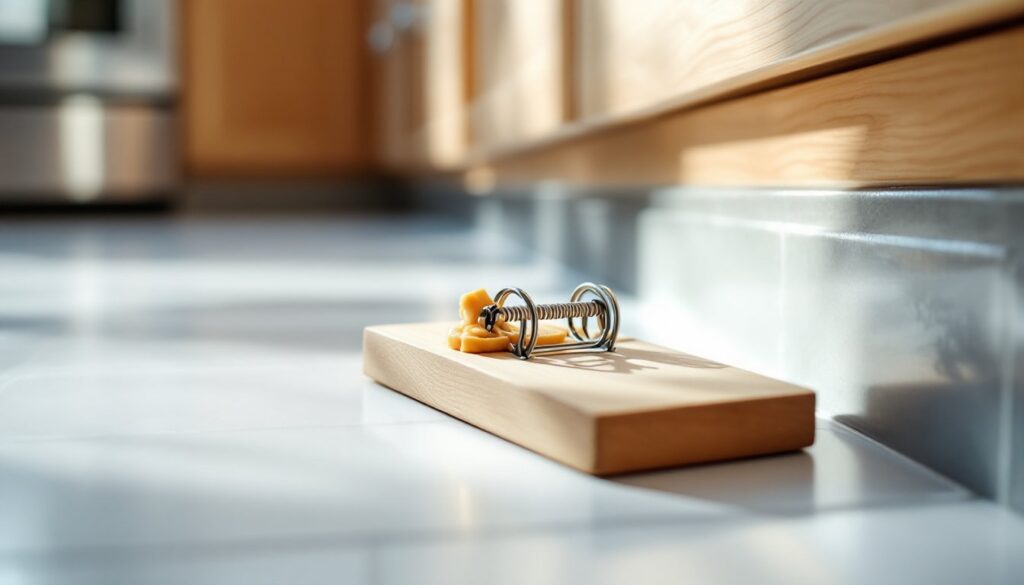
Snap traps are the standard for a reason: they’re inexpensive, reusable, and kill quickly when set correctly. The classic wood-base Victor trap costs under a dollar and uses a spring-loaded metal bar to strike the mouse when it touches the trigger plate. Plastic versions from brands like Tomcat offer easier cleanup and more sensitive triggers, but the principle is the same.
Set the trap so the trigger sits perpendicular to the wall, mice run along baseboards, not across open floor. The bar should snap across the mouse’s neck or spine, causing near-instant death. Misalignment or a weak spring can result in injury without a kill, so check that the spring tension is firm and the trigger moves freely.
Snap traps require careful handling. The bar can catch fingers during setup, and a trapped mouse may not die immediately if the trap shifts. Wear gloves when setting and disposing of snap traps to avoid direct contact with rodents, which can carry hantavirus and salmonella.
One downside: visibility. A traditional snap trap left in a high-traffic area isn’t subtle. Enclosed snap traps (like the Victor Kill & Seal) hide the mouse inside a plastic chamber, making them more appropriate for kitchens or living spaces where kids or pets are present.
Electronic and Humane Traps
Electronic traps deliver a high-voltage shock that kills in seconds. Models like the Victor Multi-Kill run on batteries or plug into an outlet and can handle multiple mice before needing to be emptied. They’re cleaner than snap traps, no blood, no visible kill, and easier to set. Just drop bait inside, turn it on, and wait for the indicator light.
The catch? Cost. Electronic traps run $30-$80, compared to a few dollars for snap traps. They also require battery maintenance or an outlet nearby, which limits placement options. For serious infestations where you’re catching multiple mice daily, the investment makes sense. For one or two strays, it’s overkill.
Humane catch-and-release traps use a one-way door or tilt mechanism to trap the mouse alive. The idea is to release it outdoors, but this approach has problems. Mice released within a half-mile of your home often return, and dumping them on someone else’s property just moves the problem. Pest control experts often recommend against live release in urban and suburban settings because of these practical limitations.
If you do go the humane route, release the mouse at least a mile away in suitable habitat (wooded areas, fields) and check the trap every few hours. A mouse left in a trap for 24 hours can die from stress, dehydration, or exposure, defeating the point.
Glue traps also exist but aren’t recommended here. They cause prolonged suffering, mice can take hours or days to die from exhaustion, dehydration, or self-injury trying to escape. Many jurisdictions and pest control professionals consider them inhumane.
Where to Place Mouse Traps for Maximum Effectiveness
Placement matters more than bait. A perfectly loaded trap in the middle of a room will sit untouched, while an empty trap along a wall might catch a mouse by accident.
Mice travel along edges, baseboards, cabinet toe kicks, behind appliances, because they have poor vision and rely on their whiskers to navigate. Set traps perpendicular to walls with the trigger end facing the baseboard. This forces the mouse to cross the trigger plate as it moves along its usual route.
Look for signs of activity before placing traps:
- Droppings: Small, dark pellets near food sources, along walls, or in cabinets
- Gnaw marks: Chewed cardboard, wood, or plastic, especially on food packaging
- Grease marks: Dark smudges along baseboards from repeated contact with oily fur
- Nesting material: Shredded paper, fabric, or insulation in hidden spots
Common high-traffic areas include:
- Behind the refrigerator, stove, and dishwasher
- Under the kitchen sink and bathroom vanity
- Along basement walls, especially near utilities or stored boxes
- Inside cabinets where food is stored
- Attics, crawl spaces, and garage corners
Set multiple traps, at least 3-6 for a typical infestation. Mice are curious and will investigate new objects, so fresh traps often catch rodents within the first 24-48 hours. After that, mice may grow wary if they see a trapped companion or if the trap smells like human handling. Rotate trap locations every few days if you’re not getting results.
Keep traps out of reach of children and pets. If you must place a trap in an open area, use an enclosed model or create a barrier with a cardboard box (cut a mouse-sized entry hole). Never set traps where a child or pet can accidentally trigger them.
How to Bait and Set Your Mouse Trap Properly
Forget the cartoons, cheese isn’t the best bait. Mice prefer high-calorie, high-protein foods with strong smells. Peanut butter is the top choice because it’s sticky (the mouse has to work the trigger to eat it), aromatic, and cheap. A pea-sized dab is enough.
Other effective baits include:
- Nutella or chocolate spread
- Bacon or beef jerky (small pieces)
- Sunflower seeds or nuts
- Dried fruit (raisins, cranberries)
- Soft cheese (if you insist on tradition, use something pungent like blue cheese or brie)
Avoid hard or dry bait that a mouse can grab and run. The goal is to make the mouse linger on the trigger plate.
When setting a snap trap, follow these steps:
- Apply bait to the trigger plate or bait cup while the trap is unset.
- Pull the spring bar back over the top of the trap until it rests on the opposite side.
- Hold the bar in place and pull back the metal arm that holds it. This is the trickiest part, use steady pressure and keep fingers clear of the trigger.
- Set the trigger notch under the metal arm. The trap is now live. Even a slight vibration can release it.
- Place the trap carefully along the wall, trigger end facing the baseboard.
If you’re nervous about snap traps catching your fingers, use a pencil or small dowel to hold the bar while you set the trigger. Alternatively, pre-bait traps for a day or two without setting them, this lets mice get comfortable and increases the catch rate once you arm them.
Electronic and humane traps are simpler: drop bait inside the chamber, close the door or activate the mechanism, and position the entrance along the wall.
Replace bait every 2-3 days if it dries out or gets dusty. Mice won’t touch stale food when fresh crumbs are available elsewhere in your home.
Safety Tips and Disposal Best Practices
Mouse traps aren’t dangerous if handled correctly, but carelessness can lead to pinched fingers, exposure to pathogens, or accidental harm to pets.
Always wear gloves when handling traps, live or dead mice, or contaminated surfaces. Mice carry diseases transmissible to humans, including hantavirus (via droppings and urine), leptospirosis, and lymphocytic choriomeningitis virus (LCMV). Hantavirus is rare but serious, symptoms include fever, muscle aches, and respiratory distress. The CDC recommends avoiding actions that stir up dust in areas with rodent droppings, so don’t vacuum or sweep: instead, spray the area with a disinfectant or bleach solution (1 part bleach to 10 parts water) and wipe with paper towels.
When disposing of a dead mouse:
- Put on disposable gloves.
- Spray the trap and mouse with disinfectant to reduce airborne particles.
- Place the mouse and trap (if disposable) into a plastic bag. Seal it.
- Double-bag and discard in an outdoor trash bin. Don’t toss it in your kitchen garbage.
- Wash your hands thoroughly with soap and water, even if you wore gloves.
Reusable traps can be cleaned with hot, soapy water or a diluted bleach solution. Rinse well and let air-dry before resetting.
If you’re using electronic traps, follow the manufacturer’s instructions for safe battery handling and cleaning. Some models have removable kill chambers that can be emptied without touching the rodent.
Keep traps away from children and pets. Even enclosed models can pose risks if a curious dog or cat knocks them over or tries to access the bait. If you have pets, consider placing traps inside a DIY bait station, a cardboard box or plastic container with a mouse-sized entrance hole cut in the side. You can find simple bait station plans online that take minutes to assemble.
If you’re catching multiple mice daily or seeing signs of a large infestation (dozens of droppings, structural damage, strong urine smell), traps alone may not be enough. At that point, a licensed pest control professional can assess entry points, apply exclusion methods, and determine if the problem extends into walls or subfloors.
Conclusion
The right mouse trap depends on your budget, tolerance for handling dead rodents, and the size of the infestation. Snap traps remain the most cost-effective and reliable choice for most homeowners, while electronic models offer cleaner operation for recurring problems. Placement along walls, proper baiting with sticky high-calorie foods, and consistent checking make the difference between a solved problem and a lingering one. Always wear gloves, disinfect after handling, and don’t rely on traps alone if you’re seeing heavy activity, seal entry points and eliminate food sources to prevent re-infestation.